Eco-Smart Living: AI Tech for Sustainable Homes & Reduced Footprint
Introduction
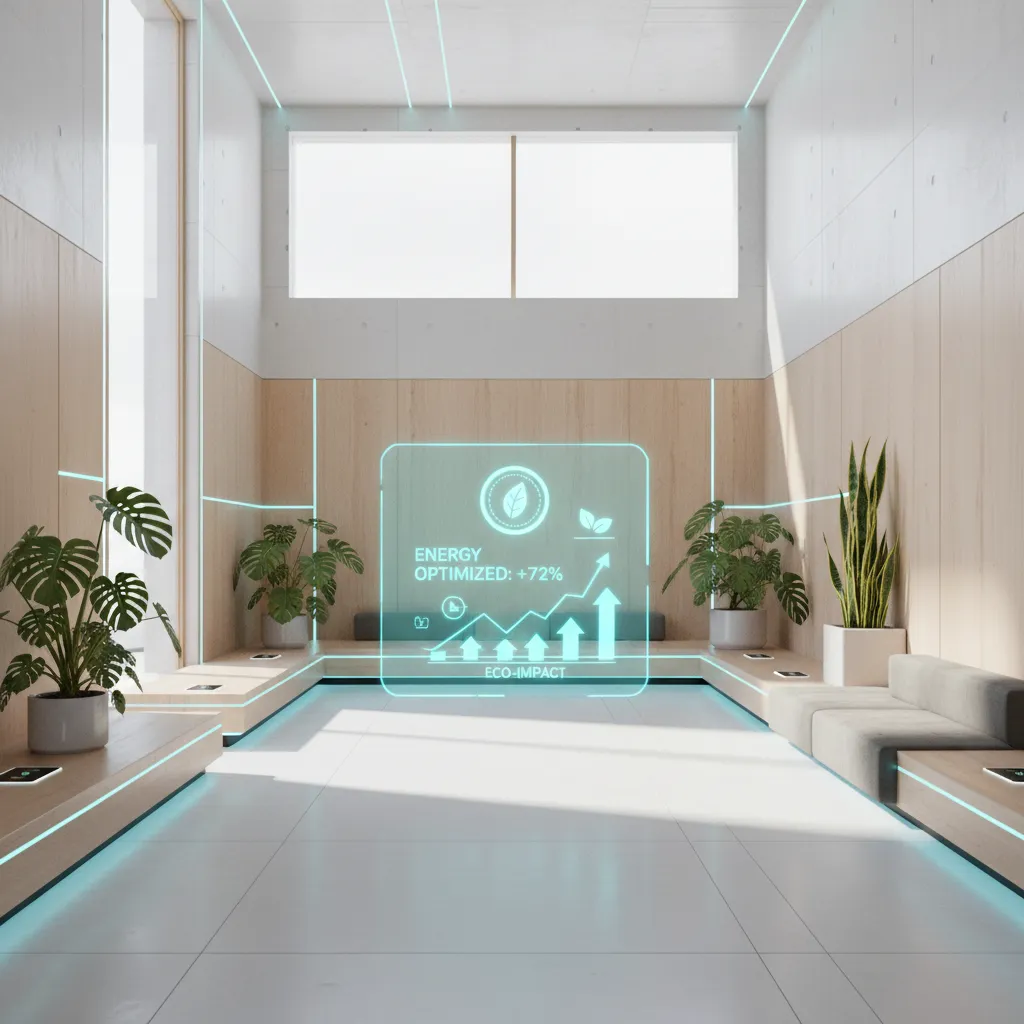
In an era where climate change is a pressing global concern, the search for sustainable living solutions has moved from a niche interest to a mainstream necessity. Our homes are a major part of the equation, accounting for roughly 20% of greenhouse gas emissions in the United States. But what if the key to a greener lifestyle wasn’t about radical sacrifice, but about smarter living? What if your home could think for itself, optimizing its resource use in real-time?
Welcome to the world of eco-smart living, where Artificial Intelligence (AI) is transforming our houses into responsive, efficient, and sustainable ecosystems. This isn’t science fiction; it’s the cutting edge of sustainable living technology. The fusion of AI and home automation empowers us to drastically reduce our carbon footprint right from our living rooms.
This comprehensive guide explores how AI smart home technology is paving the way for a more sustainable future. We’ll delve into the specific gadgets, systems, and strategies that make up an automated eco-friendly home, from intelligent climate control to AI-driven waste management. You will learn how these eco-conscious home tech solutions not only contribute to a healthier planet but also lead to significant cost savings and enhanced comfort.
The Dawn of the AI-Powered Eco-Home
For years, “smart homes” were about convenience—automating lights with a voice command or preheating your oven from the office. Today, the focus has shifted towards a much deeper purpose: AI-driven sustainability. An eco-smart home is more than a collection of connected devices; it’s a holistic ecosystem managed by an intelligent core.
This system moves beyond simple pre-set schedules. It employs machine learning algorithms to understand your family’s unique patterns, predict needs, and make proactive adjustments.
- Reactive (Manual): You feel cold, so you turn up the thermostat.
- Automated (Scheduled): Your thermostat lowers the heat every day at 9 AM when you leave for work.
- Intelligent (AI-Powered): Your AI system knows you work from home on Fridays, sees a sunny weather forecast that will naturally warm the house, and preemptively adjusts the heating to a lower, energy-saving setting without sacrificing comfort.
This is the essence of intelligent green living—a partnership between humans and technology to create a home that is both comfortable and conscientiously efficient. It’s about building a future where our homes are active participants in creating a sustainable world, a concept deeply intertwined with the ethical application of advanced systems. Related: AI Ethics Unpacked: Navigating the Moral Maze of Intelligent Systems.
Mastering Your Climate: AI for Ultimate Energy Efficiency
The largest slice of the average home’s energy pie goes to heating and cooling. This makes climate control the most critical area for achieving significant environmental and financial savings. Energy efficient AI is revolutionizing how we manage our home’s temperature, turning a once-static system into a dynamic and predictive one.
The Brain of the Home: AI Smart Thermostats
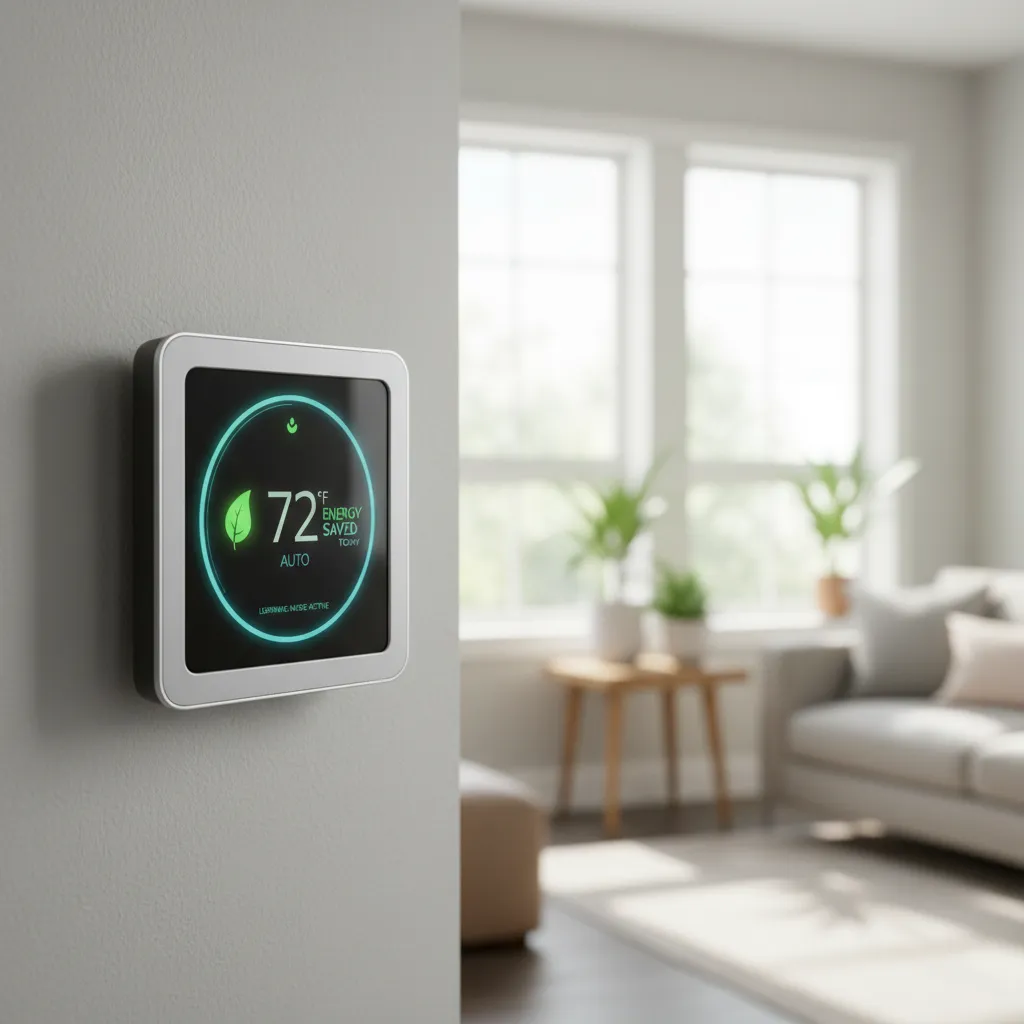
The smart thermostat is the flagship device of the eco-home innovation movement. Modern smart thermostats with AI like the Google Nest Learning Thermostat or the Ecobee Smart Thermostat go far beyond simple programming. Their intelligence lies in their ability to learn and adapt.
These devices build a detailed profile of your household’s schedule and temperature preferences within a week. But their genius doesn’t stop there. They integrate with external data streams, such as real-time weather forecasts, to make smarter decisions. If a cold front is moving in, the system might pre-heat the house during a cheaper, off-peak energy window. They use geofencing to detect when the last person has left the house and automatically switch to an “Eco” mode.
The result? The EPA’s ENERGY STAR program estimates that certified smart thermostats can save homeowners an average of $100 per year on energy bills. It’s a clear demonstration of how AI climate control home technology provides tangible benefits.
Illuminating Intelligently: Smart Lighting Energy Saving
Traditional lighting is notoriously wasteful. We’ve all left lights on in an empty room. Smart lighting energy saving systems use AI to eliminate this waste with elegant precision.
AI-driven lighting systems use a network of motion sensors, ambient light sensors, and an understanding of your daily routines to deliver the perfect amount of light, precisely when and where it’s needed.
- Presence Detection: Lights automatically turn off in unoccupied rooms.
- Daylight Harvesting: The system measures natural light entering through windows and dims the artificial lights accordingly, maintaining consistent brightness while minimizing electricity use.
- Scene Adaptation: The AI can learn that you prefer brighter, “cool” light in the kitchen during meal prep but a warmer, dimmer setting in the living room for movie nights, automating these scenes based on the time of day or a simple voice command.
This level of sustainable home automation ensures not a single watt is wasted on unnecessary illumination.
Total Visibility: AI Home Energy Management
To truly optimize your home, you need to see the full picture. This is where AI home energy management systems come in. Devices like the Sense Home Energy Monitor or Span Smart Panel are installed directly into your electrical panel, acting as a fitness tracker for your home’s electricity consumption.
Using machine learning, these systems can identify the unique electrical signature of nearly every appliance in your home. Your dashboard will show you exactly how much energy your refrigerator, washing machine, and even your “energy vampire” TV on standby are using. This is AI power consumption monitoring at its most granular.
The AI then provides actionable insights:
- It can alert you if an old freezer is suddenly drawing more power than usual, indicating it may need maintenance.
- It tracks your solar panel production against your consumption, helping you maximize your use of free, renewable energy.
- It gives you a clear, data-driven understanding of your home’s carbon footprint, empowering you to make informed changes. This advanced pattern recognition shares conceptual roots with how AI is revolutionizing other data-intensive fields, like finance. Related: The Ultimate Guide to AI Trading Bots and Automated Investing.
Beyond Electricity: AI for Holistic Resource Management
A truly sustainable home manages more than just its electricity. The same AI principles can be applied to other critical resources, like water and food, creating a comprehensive approach to smart home resource management.
Smart Water Conservation: From Leaks to Landscapes
Water scarcity is a growing issue in many parts of the world. AI water conservation technology offers powerful solutions for both inside and outside the home.
Inside, smart water monitors like the Phyn Plus use high-definition pressure-wave analysis to learn the unique signature of every fixture in your home. It can tell the difference between a running shower and a flushing toilet. More importantly, it can detect tiny leaks anywhere in your plumbing system—long before you’d notice them on your water bill—and can even automatically shut off the water to prevent catastrophic damage.
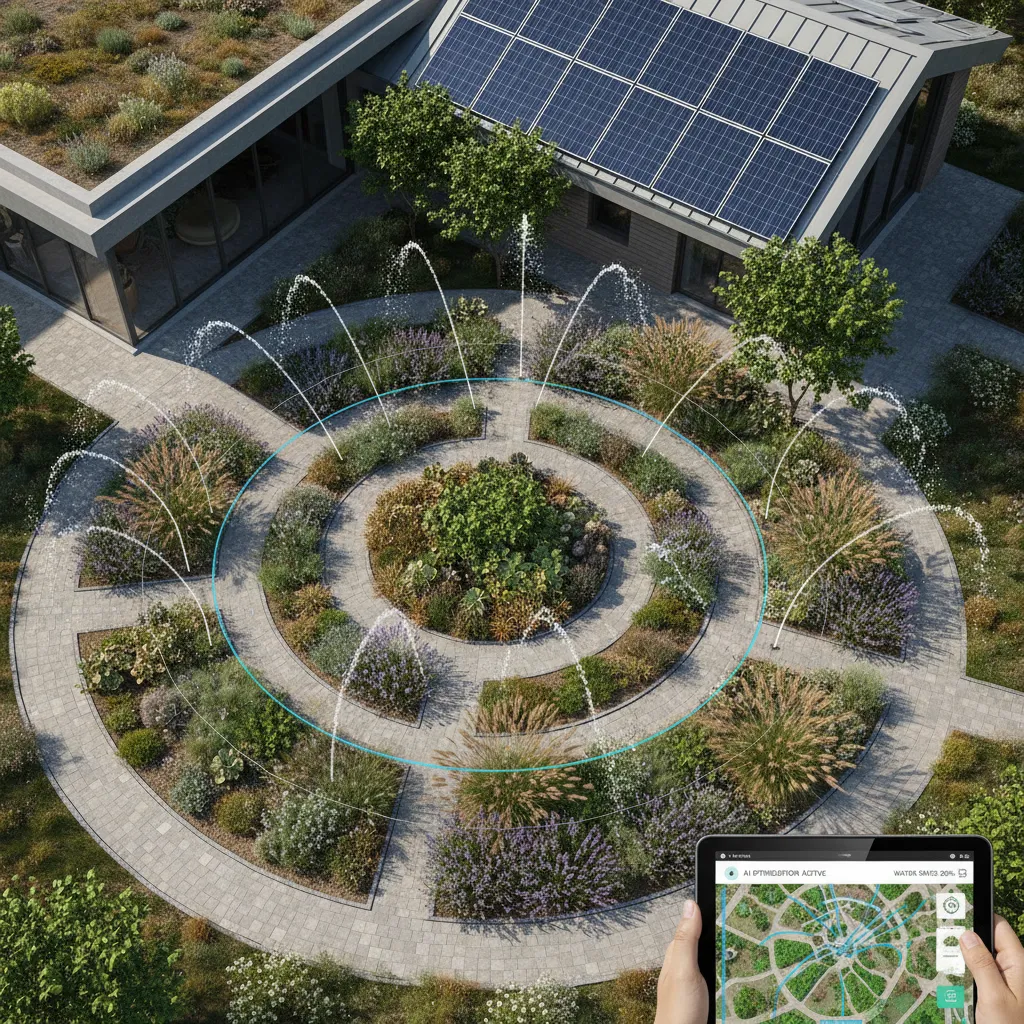
Outside, AI smart irrigation systems are transforming gardening and landscaping. Instead of watering on a fixed schedule, these systems pull data from local weather stations, factoring in recent rainfall, humidity, wind speed, and future forecasts. Paired with soil moisture sensors, the AI ensures your lawn and garden receive the precise amount of water they need, exactly when they need it. This prevents overwatering, conserves a precious resource, and promotes healthier plant growth.
The Final Frontier: AI in Smart Waste Management
Reducing waste is a cornerstone of sustainable living, and AI is now entering this domain. While less common in individual homes today, AI waste management is a rapidly emerging field in sustainable property tech.
Imagine a smart bin in your kitchen that automatically sorts recyclables from trash. Companies like Lasso Loop are developing home-scale appliances that use sensors and AI to identify materials (plastics, glass, metals), ensuring a clean and uncontaminated recycling stream.
Furthermore, AI-powered solutions like the Lomi smart composter use sensors to optimize the heat, humidity, and aeration needed to break down food waste into nutrient-rich dirt in a matter of hours. This directly tackles the problem of food scraps ending up in landfills, where they produce methane, a potent greenhouse gas. These technologies embody the principle of AI for responsible consumption.
The Integrated Ecosystem: Smart Appliances & Renewables
The true power of a sustainable residential AI is realized when all these components work together. AI acts as the conductor of an orchestra, ensuring every device and system plays in perfect harmony for maximum efficiency.
The Automated, Eco-Friendly Kitchen and Laundry
The latest generation of smart appliances are eco-friendly by design, but AI supercharges their potential. Your home energy management system knows when electricity rates are lowest (off-peak hours) or when your solar panels are generating a surplus of power.
It can automatically schedule your smart dishwasher, washing machine, or EV charger to run during these optimal windows. This simple act of load-shifting reduces strain on the power grid and lowers your energy costs. Smart refrigerators with internal cameras and object recognition AI can help you track your inventory, suggesting recipes to use up ingredients before they spoil and automatically adding items to your shopping list, directly combating food waste.
Unlocking Green Power: AI and Renewable Energy
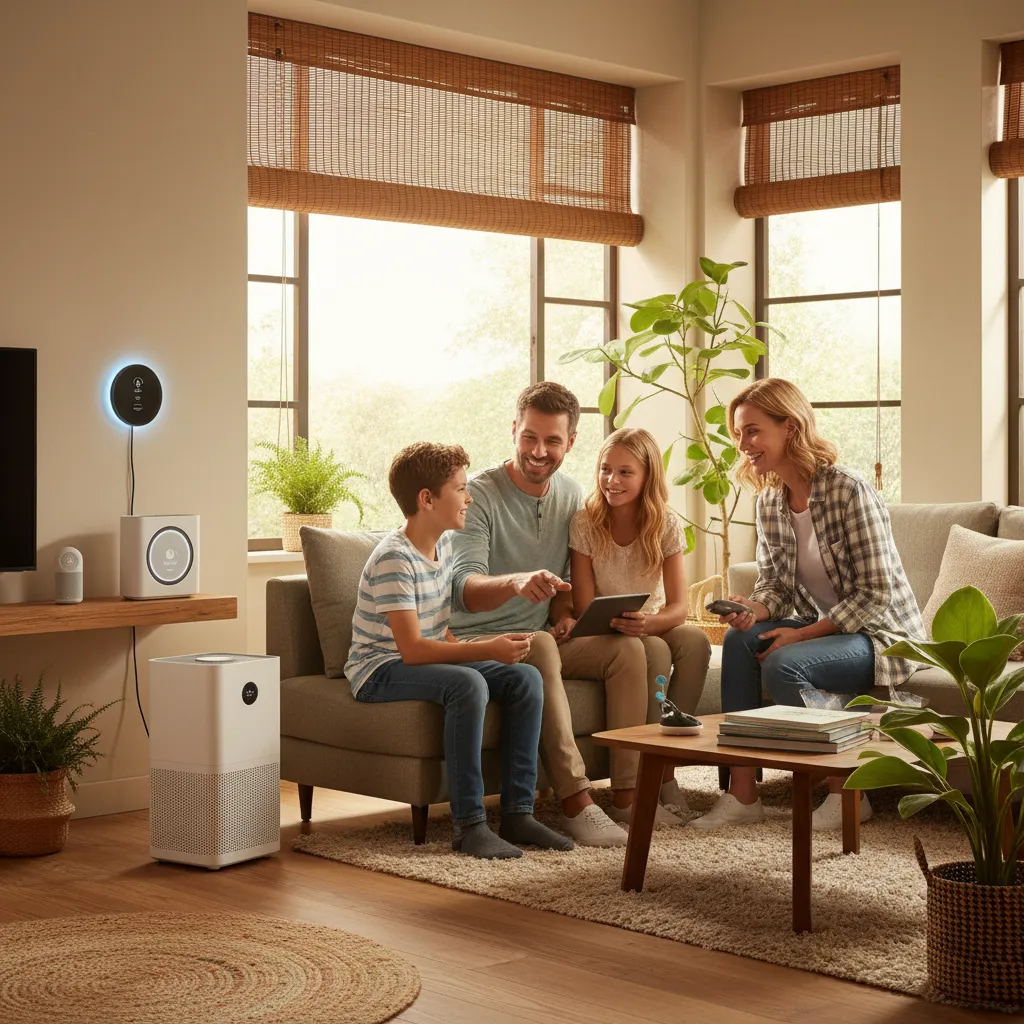
For homes with solar panels, a home battery, or both, AI is a game-changer. An AI home energy management system is essential for optimizing these renewable energy smart homes.
The AI performs a constant, complex calculation based on:
- Your home’s predicted energy usage for the day.
- The weather forecast and predicted solar generation.
- The current state of your battery charge.
- Real-time electricity prices from the utility grid.
Based on this data, it makes intelligent decisions: Should it use the solar power now? Store it in the battery for use during the expensive evening peak? Or sell the excess back to the grid for a credit? This intelligent management ensures that not a single electron of clean energy is wasted, maximizing both the environmental and financial return on your investment in green tech for homes. This level of complex, brain-like processing hints at the future of computing itself. Related: Neuromorphic Computing: The Future of Brain-Inspired AI.
The Big Picture: Tracking and Shrinking Your Carbon Footprint
Ultimately, the goal of eco-smart living is to achieve a measurable reduction in your environmental impact. AI tools make this abstract goal tangible and achievable.
Integrated home sustainability platforms provide a centralized dashboard that visualizes your resource consumption in real-time. You can see your electricity, water, and gas usage, track your waste diversion rates, and monitor your solar energy production. The system translates this data into an easily understandable metric: your home’s carbon footprint.
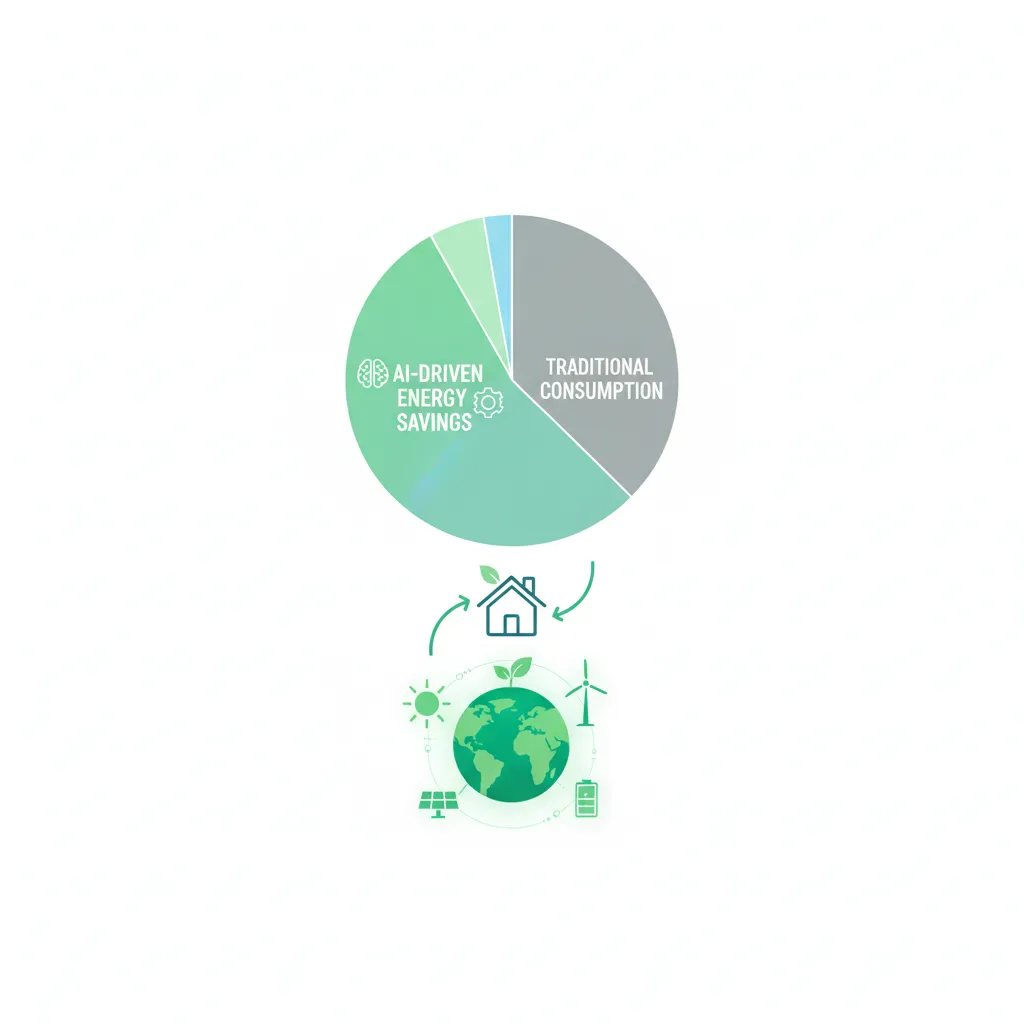
This is where smart home carbon reduction becomes a reality. The AI can “gamify” sustainability by setting weekly or monthly reduction goals, offering personalized tips, and showing your progress over time. It creates a powerful feedback loop that connects your daily actions to a larger environmental outcome, a core principle in using technology for positive behavioral change. Related: The Psychological Impact of Hyper-Realistic AI Content.
The Future of Sustainable Homes: What’s Next?
The field of AI for environmental impact is just getting started. The future of sustainable homes points towards even deeper integration and hyper-personalization.
We are moving towards Green building AI, where artificial intelligence is used during the design and construction phase to create buildings that are inherently more efficient. AI can model a building’s energy performance based on materials, orientation, and local climate data, optimizing its design before a single brick is laid.
Expect to see greater integration with electric vehicles, where your home and car seamlessly manage energy flow. Your car’s battery could power your home during an outage or sell energy back to the grid during peak demand, all managed by your home AI. The ultimate vision is an ambient intelligence, where the home anticipates your needs and manages resources so flawlessly that sustainability becomes an effortless, invisible part of your daily life. It’s an exciting frontier, much like the advancements AI is bringing to personal well-being. Related: The Wearable AI Revolution: A New Era for Mind and Body Wellness.
Conclusion
Creating a sustainable home in the 21st century is no longer just about recycling bins and low-flow showerheads. It’s about embracing intelligent, adaptive technology that works for you and the planet. AI-driven sustainability offers a powerful toolkit of home sustainability solutions that can drastically reduce our collective carbon footprint, one household at a time.
From smart thermostats that learn your routine to AI power consumption monitoring that uncovers hidden waste, these eco-friendly smart home gadgets provide the data and automation needed to make a real difference. By integrating AI into our homes, we are not just building smarter houses; we are building a more responsible and hopeful future.
Your journey into eco-smart living can start today. Begin with a single device, understand its impact, and gradually build your home’s intelligence. It’s a practical, powerful, and profoundly important step towards a more sustainable world.
Frequently Asked Questions (FAQs)
Q1. How can technology help create a sustainable home?
Technology, specifically AI and IoT (Internet of Things) devices, helps create a sustainable home by automating and optimizing resource consumption. Smart thermostats reduce HVAC energy use, smart lighting saves electricity, AI monitors prevent water leaks, and energy management systems provide data to eliminate waste, all contributing to a lower carbon footprint and reduced utility bills.
Q2. Do smart homes actually save energy?
Yes, smart homes can save significant energy. Devices like AI-powered thermostats can reduce heating and cooling costs by 10-20% by learning occupancy patterns and optimizing schedules. Smart lighting, automated blinds, and energy monitoring systems further contribute by ensuring energy is only used when and where it’s needed, cutting down on waste.
Q3. What is the most impactful eco-friendly smart home device?
For most households, the most impactful device is an AI smart thermostat. Since heating and cooling account for the largest portion of home energy consumption, optimizing this system provides the most significant and immediate savings in both energy and cost.
Q4. How does AI reduce a home’s carbon footprint?
AI reduces a home’s carbon footprint primarily through efficiency and optimization. It learns a household’s behavior to eliminate wasted energy in heating, cooling, and lighting. It also optimizes the use of renewable energy sources like solar panels and helps reduce water waste and food waste through smart monitoring and management systems.
Q5. What are examples of sustainable living technology?
Examples of sustainable living technology include AI smart thermostats (Google Nest, Ecobee), home energy monitors (Sense), smart irrigation controllers (Rachio), smart lighting systems (Philips Hue), automated smart blinds, smart appliances that run during off-peak hours, and AI-powered composting and waste-sorting systems.
Q6. Is smart home automation truly eco-friendly?
When implemented with sustainability in mind, smart home automation is decidedly eco-friendly. By giving homeowners precise control and intelligent automation over their energy and resource consumption, it directly combats waste. The key is to use the technology not just for convenience but to actively manage and reduce the home’s environmental impact.