Bio-Integrated Computing: Merging Biology & Tech for a Living Future
Introduction
Imagine a computer that doesn’t just process data but lives. A machine that can heal its own circuits, store the entirety of human knowledge in a container the size of a sugar cube, and solve problems by mimicking the very processes of a living brain. This isn’t a scene from a sci-fi blockbuster; it’s the tangible future being built today in the revolutionary field of bio-integrated computing.
For decades, we’ve relied on silicon chips, cramming more and more transistors into smaller spaces to power our digital world. But we’re approaching the physical limits of this paradigm. The future of computing demands a radical new approach—one that’s more powerful, more efficient, and more sustainable. Bio-integration is that approach. It represents the ultimate fusion of synthetic and organic, where the building blocks of life—DNA, proteins, and neurons—become the hardware of tomorrow.
In this deep dive, we’ll explore the breathtaking landscape of biological computing. We’ll decode how DNA computing is set to revolutionize data storage, demystify the inner workings of molecular computing, and examine how neuro-biocomputing is creating a new frontier for bio-inspired AI. Get ready to discover a world where technology is not just built, but grown.
What Exactly Is Bio-Integrated Computing? Beyond the Sci-Fi Hype
At its core, bio-integrated computing is an emerging discipline that uses biological materials and systems to perform computational tasks. Instead of etching circuits onto silicon wafers, scientists are engineering living components to process, store, and transmit information. This field, also known as organic computing or wetware computing, moves beyond the rigid binary (0s and 1s) of traditional machines to embrace the complexity, parallelism, and efficiency of nature.
Think of it this way: a standard computer is like a high-speed train on a fixed track. It’s incredibly fast and precise at its specific task, but it can only follow the path laid out for it. A biocomputer, on the other hand, is like a flock of birds. Each individual bird might be slower than the train, but together they can navigate complex environments, adapt to obstacles in real-time, and achieve a collective goal with incredible efficiency and flexibility.
This fundamental difference stems from the components used. While conventional computers rely on electron flow through metal, biocomputers leverage the intricate biochemical processes of life itself. This opens the door to creating adaptive bio-systems that can learn, evolve, and interact with their environment in ways a silicon chip never could. These are not just computers; they are, in a very real sense, living computers.
The Building Blocks of Life as the New Hardware
The magic of bio-integrated computing lies in harnessing the natural computational power of biological molecules. Scientists are re-engineering these fundamental components to create a new generation of hardware that is smaller, faster, and more powerful than anything that has come before.
DNA Computing: The Ultimate Hard Drive
Our entire genetic blueprint is encoded in DNA, a molecule capable of storing vast amounts of information with incredible density. Scientists have realized that the four nucleotide bases—Adenine (A), Guanine (G), Cytosine (C), and Thymine (T)—can be used to encode digital data, much like 0s and 1s.
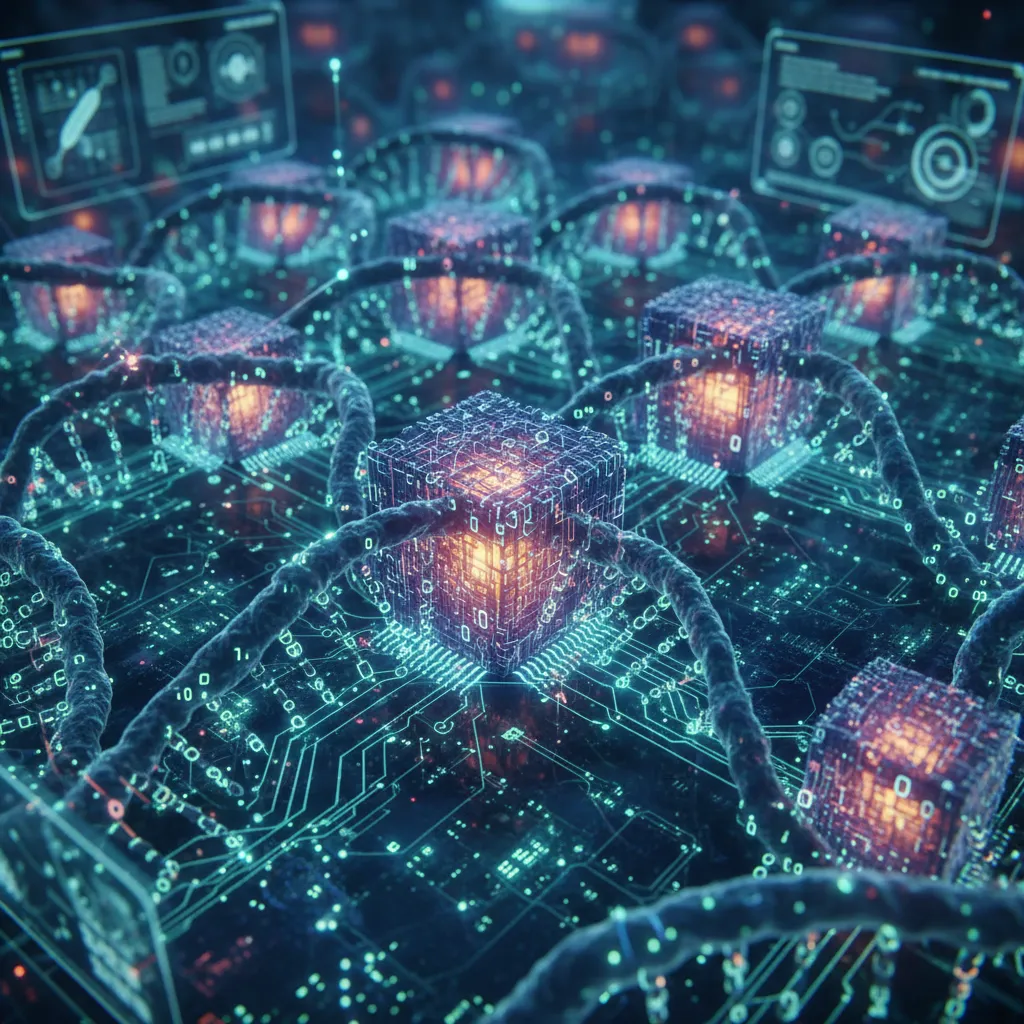
The potential of data storage DNA is staggering. A single gram of DNA could theoretically store over 215 petabytes (215 million gigabytes) of information. To put that in perspective, every movie ever made, every song ever recorded, and every book ever written could fit in a container smaller than a coffee cup. Furthermore, DNA is incredibly durable, capable of preserving data for thousands of years with minimal degradation, offering a long-term archival solution that makes current hard drives look fragile and fleeting. Researchers at Microsoft and the University of Washington have already successfully encoded and retrieved terabytes of data from synthetic DNA, proving this isn’t just theory but an emerging reality.
Related: Gemini vs. ChatGPT: Which AI Assistant Reigns Supreme in 2024?
Molecular Computing and Biological Circuits
If DNA is the hard drive, then proteins and other molecules are the processors. Molecular computing uses individual molecules to act as logic gates—the fundamental building blocks of any computer circuit. By controlling chemical reactions, scientists can make molecules perform calculations.
This has led to the development of biological circuits: engineered genetic networks within living cells (like bacteria or yeast) that can be programmed to execute specific tasks. For example, a biological circuit could be designed to detect the presence of a cancer marker in the body and, upon detection, trigger the production of a therapeutic protein to fight the disease. These “doctor-in-a-cell” concepts are at the forefront of personalized medicine computing, turning living cells into microscopic, programmable robots.
Neuro-Biocomputing: Tapping into the Brain’s Power
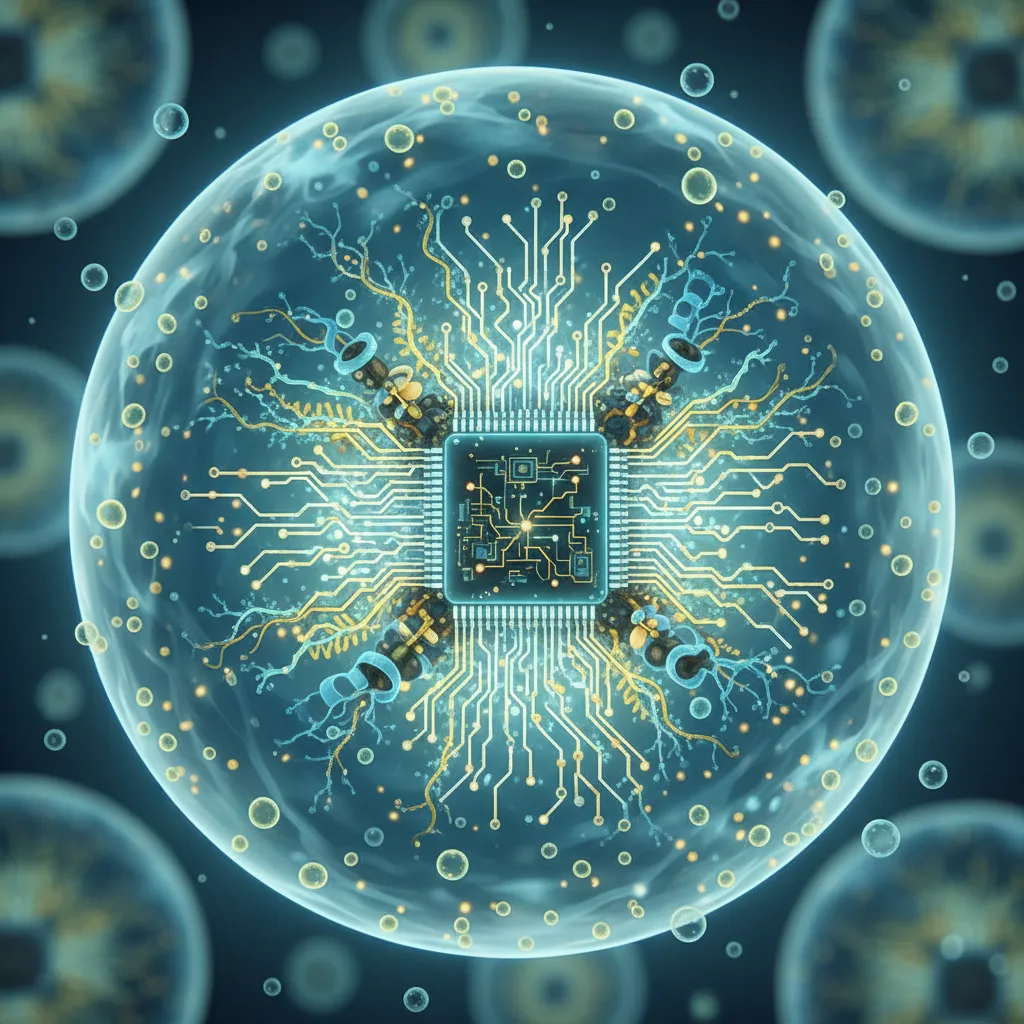
The human brain is arguably the most powerful and efficient computer on Earth. Neuro-biocomputing aims to harness this power by culturing living neurons on microelectrode arrays. These “brain-on-a-chip” systems can process information, learn from experience, and form neural networks that mimic the brain’s architecture.
This is a cornerstone of brain-inspired computing. While current AI is powerful, it often requires massive data centers and enormous amounts of energy. A system based on living neurons could perform complex pattern recognition and learning tasks using a tiny fraction of the power. This approach is not just about making AI smarter; it’s about making it more efficient and human-like, bridging the gap between artificial and biological intelligence and pushing the boundaries of the human-machine interface biology.
The Engine of Creation: AI and Synthetic Biology Synergy
The immense complexity of designing and building these biological systems would be nearly impossible without a powerful ally: Artificial Intelligence. The synergy between AI and synthetic biology is the engine driving many of these computational biology advancements.
Synthetic biology tech involves the design and construction of new biological parts, devices, and systems. AI algorithms can rapidly design and simulate thousands of potential biological circuits or protein structures, predicting how they will behave in a real-world environment before a single experiment is run in the lab. This dramatically accelerates the pace of research and development.
AI helps us:
- Design Genetic Code: Write DNA sequences from scratch to create proteins and circuits with novel functions.
- Predict Outcomes: Simulate complex cellular interactions to ensure a biological computer will work as intended.
- Automate Experiments: Control robotic lab equipment to test thousands of designs with high precision.
This powerful partnership is allowing us to move from simply observing biology to actively engineering it for computational purposes.
Related: Human-AI Synergy: The Future of Work and Productivity
Real-World Applications: Where Biology Meets the Digital Age
While some of this technology sounds like it’s decades away, the practical applications of bio-integrated computing are already beginning to emerge, promising to reshape entire industries.
Revolutionizing Medicine and Healthcare
This is perhaps the most immediate and impactful area. Bio-sensor technology is leading to the creation of smart wearables and implants that go far beyond simple fitness tracking. Imagine a contact lens that monitors glucose levels in a diabetic’s tears or a small, implantable chip that continuously screens for the earliest signs of cancer.
These devices often feature self-healing electronics, using biological polymers that can repair minor scratches or cracks, drastically increasing their lifespan and reliability within the body. This is the essence of bioelectronics: creating a seamless, stable interface between living tissue and digital technology. These advancements are paving the way for truly personalized medicine computing, where treatments are tailored not just to your genome, but to your body’s real-time data.

Creating Sustainable Computing Solutions
Modern data centers are colossal energy consumers, contributing significantly to global carbon emissions. Bio-integrated computing offers a green alternative. Biological processes are inherently energy-efficient. A biocomputer performing complex calculations inside a cell uses minuscule amounts of energy compared to a supercomputer.
Moreover, these systems are built from bio-materials for tech, meaning they are biodegradable and environmentally friendly. This shift represents one of the most promising sustainable computing solutions, tackling the tech industry’s growing climate footprint head-on.
The Future of Robotics and Edge Computing
The field of robotics is also set for a biological revolution. Bio-robotics involves creating robots from living muscle tissue and cells, resulting in machines that are soft, flexible, and capable of movements that are impossible for rigid metal robots. These “xenobots” or “living robots” could be used for tasks like targeted drug delivery inside the body or cleaning up microplastics from the oceans.
On a smaller scale, edge computing biology is about decentralizing computation. Instead of sending data to a remote cloud server, tiny, self-powered biocomputers could perform analysis directly at the source—whether it’s on a farm sensor monitoring soil health or within a smart device in your home. This approach is faster, more secure, and vastly more efficient.
Related: The Future of Human-Robot Collaboration: AI’s Next Frontier
Navigating the Frontier: Challenges and Ethical Considerations
Like any revolutionary technology, the path to a bio-integrated future is filled with significant hurdles and profound ethical questions. Acknowledging these challenges is crucial for responsible innovation.
Technical Hurdles to Overcome
- Error Rates: Biological processes are naturally “noisy” and prone to mutations and errors. Achieving the high fidelity required for reliable computation is a major challenge for bio-nanotechnology.
- Stability and Longevity: Keeping biological components alive and functional outside of their natural environment is difficult. A “living computer” has a finite lifespan and requires specific conditions to operate.
- The Interface Problem: Creating a seamless, high-bandwidth connection between soft, wet biological systems and hard, dry electronic hardware remains a key bottleneck in the field of bioelectronics.
The Ethical Maze of Bio-Computing
As we blur the lines between machine and organism, we must confront deep philosophical and ethical questions. The field of ethical bio-computing is dedicated to navigating these complex issues:
- Defining Life: When we create cellular constructs that can process information, replicate, and react to their environment, at what point do we consider them “alive”? What rights, if any, should they have?
- Data Security and Privacy: If your medical data is stored in an implantable bio-sensor or your DNA, who owns it? How do we protect it from being hacked or misused?
- Dual-Use Potential: The same technology that can be used to program cells to fight disease could potentially be weaponized. Establishing strong ethical guidelines and regulations is paramount.
Navigating this new world requires not just brilliant scientists but also thoughtful ethicists, policymakers, and an engaged public.
Related: Ethical AI Content Creation: Navigating Bias, Trust, and Responsibility
Conclusion: The Dawn of the Living Machine
Bio-integrated computing is no longer a distant dream. It’s an active, vibrant field of research that is fundamentally changing our definition of technology. From storing the world’s data in DNA to programming cells as microscopic doctors, these future tech trends are laying the groundwork for a world where our technology is as alive and adaptive as we are.
We are moving from a world of cold, hard silicon to one of warm, soft biology. This transition promises to solve some of humanity’s biggest challenges, from incurable diseases to climate change. The journey is complex and filled with both immense promise and profound questions. But one thing is clear: the future of computing isn’t just about building faster machines—it’s about bringing technology to life.
What part of this bio-integrated future are you most excited to see unfold?
Frequently Asked Questions (FAQs)
Q1. What is bio-integrated computing in simple terms?
In simple terms, bio-integrated computing is the use of living materials, like DNA, proteins, or even brain cells, to build computers. Instead of using electricity flowing through silicon chips, it uses biochemical processes to store information and perform calculations, making technology more efficient, powerful, and compatible with the natural world.
Q2. What is an example of a biocomputer?
A prime example is a “DNA hard drive,” where digital data (like photos and text) is converted into a sequence of DNA bases (A, T, C, G) and stored in synthetic DNA molecules. Another example is a simple biological circuit inside a yeast cell that is engineered to detect a specific chemical, like a pollutant, and change color to signal its presence.
Q3. How is DNA used for data storage?
Digital data, which is in binary format (0s and 1s), is translated into the four-letter genetic alphabet of DNA (A, T, C, G). For example, 00 could be assigned to A, 01 to C, 10 to G, and 11 to T. A machine called a DNA synthesizer then creates custom DNA strands with this exact sequence. To read the data back, a DNA sequencer decodes the sequence, which is then translated back into the original binary file.
Q4. What are the main advantages of biological computing over silicon computing?
The main advantages are massive parallelism (millions of calculations can happen simultaneously in a small space), incredible data density (DNA can store millions of times more data than a hard drive of the same size), and extreme energy efficiency (biological processes use far less power than electronic ones). They also use biodegradable materials, making them a more sustainable solution.
Q5. Is wetware computing possible?
Yes, wetware computing is not only possible but is an active area of research. The term “wetware” refers to computational systems made from living, biological materials (wet components). Scientists have already created basic logic gates from molecules and built simple processors using living neurons on a chip, demonstrating that the foundational concepts are viable.
Q6. What are the ethical concerns of mixing biology and technology?
The primary ethical concerns include questions about the definition of life, data privacy for biological implants, the potential for unintended environmental consequences if engineered organisms escape the lab, and the risk of misuse for surveillance or biological weapons. The field of ethical bio-computing actively works to address these issues to ensure responsible development.