Autonomous AI Agents: The Future of Productivity & Business Automation

Introduction
We’re all drowning in a sea of digital noise. The endless stream of emails, the constant pings from messaging apps, the complex spreadsheets, and the mountain of data we’re expected to process daily—it’s a recipe for burnout. For years, the promise of technology was to make our lives easier, yet it often feels like we’ve just traded one set of manual tasks for another, more complex digital one. But what if our tools could do more than just follow commands? What if they could understand our goals, anticipate our needs, and take action on our behalf?
This is the paradigm-shifting promise of autonomous AI agents. Forget the simple chatbots and voice assistants you know. We’re entering a new era of AI-powered automation where digital entities can independently plan, execute, and adapt to complex tasks, effectively acting as proactive partners in both our personal and professional lives. These generative AI agents are set to become the most significant force in transforming business with AI since the dawn of the internet.
In this deep dive, we’ll unpack the world of autonomous AI agents. You’ll learn exactly what they are, how they differ from the AI models that power them, and the incredible practical applications already emerging. We will explore how they are becoming indispensable AI productivity tools, sophisticated personal AI assistants, and the backbone of intelligent automation solutions for enterprises. Welcome to the future of work AI—it’s more proactive, efficient, and intelligent than you ever imagined.
What Are Autonomous AI Agents, Really? Beyond the Hype
The term “AI agent” is everywhere, but it’s often used loosely. To truly grasp the future of AI, we need to understand the distinction between a simple AI tool and a truly autonomous agent. An autonomous agent is a sophisticated software entity that perceives its environment, makes its own decisions, and takes actions to achieve specific goals without direct human intervention.
Think of it this way: a calculator is a tool. You give it a command (2+2), and it gives you a fixed output (4). A generative AI model like ChatGPT is a more advanced tool. You give it a prompt, and it generates a creative or analytical response. An autonomous AI agent, however, is a digital employee. You give it a goal—“Find the best flight and hotel options for a business trip to Tokyo next month, book them based on my known preferences for window seats and morning departures, and add the itinerary to my calendar”—and it handles the entire multi-step process on its own.
From Simple Scripts to Intelligent Actors
The journey to autonomous agents began with basic automation scripts and Robotic Process Automation (RPA), which are great at handling repetitive, rule-based tasks. However, they are brittle; if a website’s layout changes, the script breaks.
AI automation takes this a massive leap forward. By integrating large language models (LLMs) and other advanced AI, these agents can understand context, handle ambiguity, and adapt to new information. This is the core of AI agent technology: moving from rigid, pre-programmed instructions to flexible, goal-driven action.
The Core Components of an AI Agent
While the technology is complex, most autonomous agents are built around a few key components that mimic a human workflow:
- Perception: The agent takes in data from its digital environment. This could be anything from reading new emails and analyzing a spreadsheet to monitoring a website for price changes or scraping data from the web.
- Reasoning & Planning (The “Brain”): This is where the magic happens. Using a powerful AI model (often a generative AI LLM), the agent breaks down a complex goal into a series of smaller, actionable steps. It formulates a plan, considers potential obstacles, and decides on the best course of action. This is the heart of AI for decision making.
- Action: The agent executes its plan by interacting with other software, tools, and APIs. This could involve sending an email, updating a CRM, booking a flight, or running a piece of code.
- Memory: To improve over time, agents need a memory. They can store information from past interactions, learn user preferences, and access knowledge bases to make better decisions in the future. This ability to learn and adapt is what makes them truly intelligent.
AI Model vs. AI Agent: A Crucial Distinction
It’s easy to confuse an AI model with an AI agent, but the difference is fundamental.
- An AI Model (like GPT-4 or Gemini) is the engine. It’s a powerful pattern-recognition and prediction machine. It can write, code, and reason, but it can’t act on its own.
- An AI Agent is the entire vehicle. It uses the AI model as its brain to understand a goal, but it also has the “chassis” (the agentic framework) and the “wheels” (access to tools and APIs) to navigate the digital world and perform tasks.
In short, you prompt a model, but you delegate to an agent. This shift from prompting to delegating is the key to unlocking the next level of productivity.
The Revolution in Personal Productivity: Your Own AI Assistant
The concept of personal AI assistants is not new, but autonomous agents are poised to make today’s virtual assistants like Siri and Alexa look like relics. Instead of being reactive command-takers, the next generation of assistants will be proactive life managers, handling the digital clutter so you can focus on what matters.
Managing Your Digital Life Autonomously
Imagine an assistant that doesn’t just remind you of a meeting but prepares you for it. Before a sales call, your agent could automatically:
- Scan the attendee’s LinkedIn profiles for recent activity.
- Pull up your company’s interaction history from the CRM.
- Summarize the key points from your last email exchange.
- Draft a pre-meeting agenda and send it for your approval.
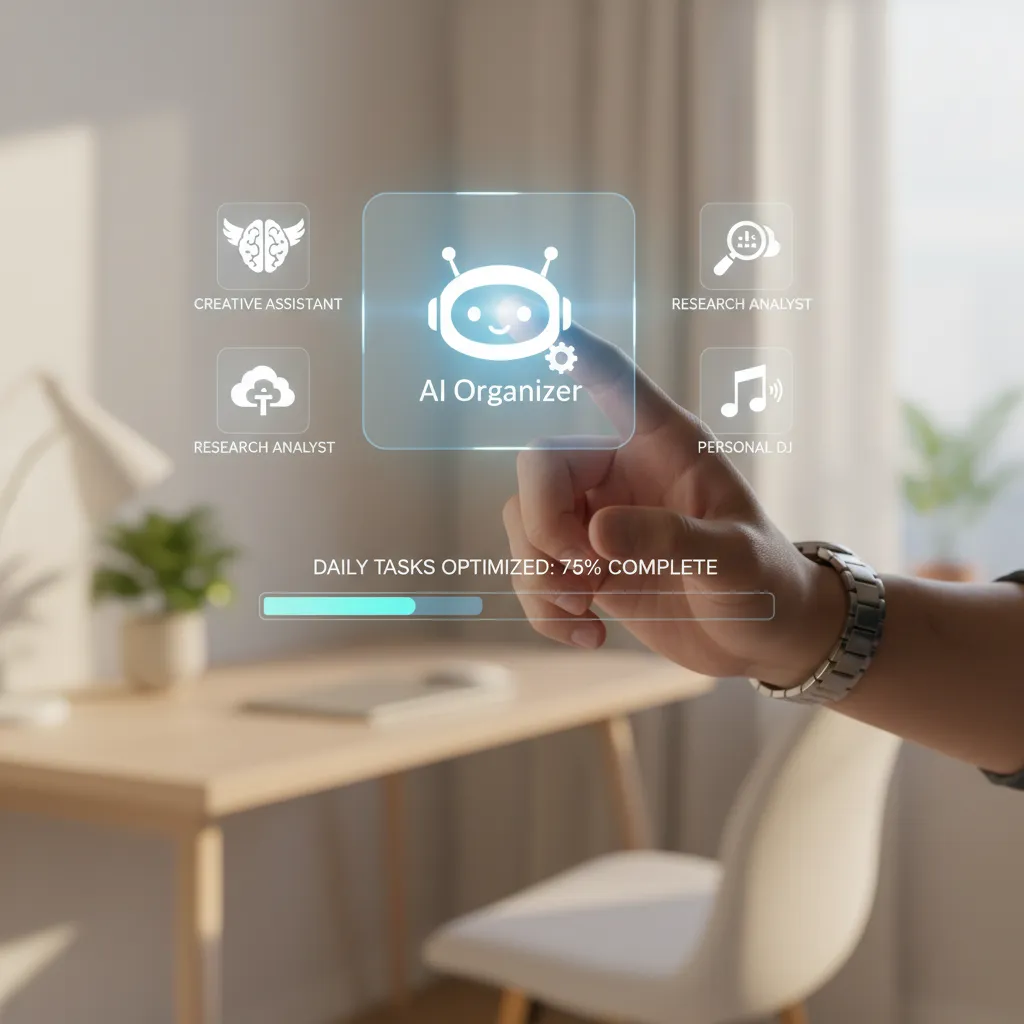
This extends to all areas of digital life. An agent could manage your inbox by categorizing emails, drafting replies to common queries, and summarizing long threads into a few bullet points. It could plan your entire vacation, research investment opportunities based on your financial goals, or even manage your smart home with an unprecedented level of intelligence. Related: AI for Personal Growth: How to Master New Habits and Unlock Your Full Potential.
A Partner in Learning and Creativity
These agents aren’t just for administrative tasks. They are becoming powerful AI productivity tools for knowledge workers, creatives, and developers. A writer could deploy an agent to conduct deep research on a topic, gather credible sources, and create a detailed outline. A developer could use an AI agent to monitor code for errors, suggest optimizations, and even write boilerplate code, drastically speeding up the AI agent development cycle. For students and lifelong learners, this technology promises a new era of personalized education. Related: AI for Student Success: Smart Tools & Adaptive Learning Strategies.
Transforming Business Operations with AI-Powered Automation
While the impact on personal productivity is profound, the true revolution is happening within organizations. Enterprise AI agents are moving beyond the experimental phase and are now being deployed to reimagine core business processes. This is the frontier of intelligent automation solutions.
Streamlining Complex Workflows
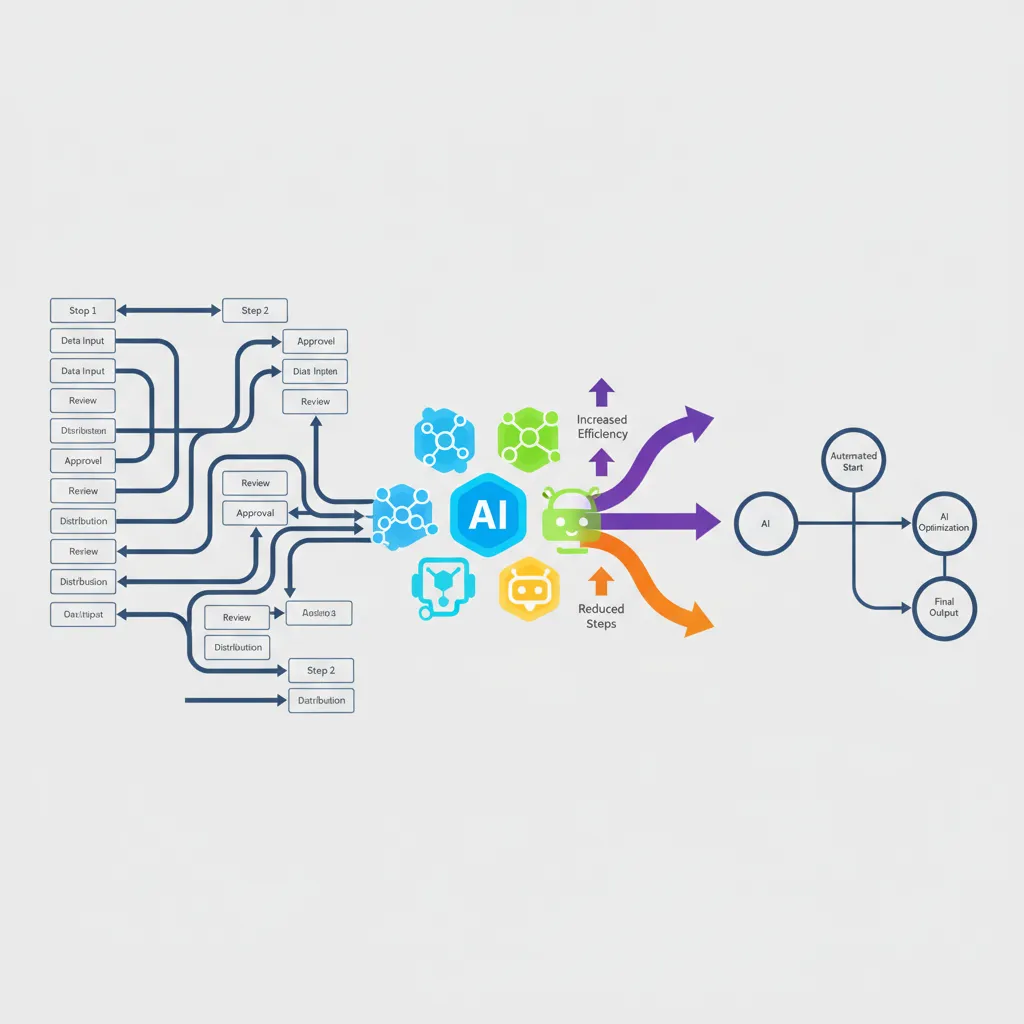
Traditional business automation focused on single, repetitive tasks. AI workflow automation tackles entire end-to-end processes that require reasoning and decision-making.
Consider the “procure-to-pay” process in a large company. It involves multiple steps: creating a purchase order, getting approvals, receiving the invoice, matching it against the order, and processing the payment. An autonomous AI agent can manage this entire chain. It can communicate with suppliers, flag discrepancies between invoices and purchase orders, route exceptions to the right human for review, and process payments, all while logging every action in the company’s ERP system. This level of AI in business operations drastically increases AI agent efficiency and reduces costly human errors.
Supercharging Departments with Specialized Agents
We are seeing the rise of specialized AI agents for business, each trained for a specific function:
- Marketing: AI agents can perform real-time competitor analysis, manage ad spend across multiple platforms by shifting budget to the best-performing campaigns automatically, and generate personalized email campaigns at scale.
- Sales: Agents can qualify leads by engaging with them via chatbot or email, schedule demos for the sales team, and automatically update the CRM with every interaction, freeing up salespeople to do what they do best: build relationships and close deals.
- Human Resources: An HR agent can screen resumes, schedule interviews with candidates and hiring managers across different time zones, and handle the onboarding paperwork for new hires.
- IT & DevOps: Agents can monitor network performance, detect security threats in real-time, and automatically deploy fixes for common issues, reducing system downtime.
Human-Agent Teaming: The New Collaborative Paradigm
The goal isn’t to replace humans but to augment them. The future of work involves “human-agent teams,” where humans provide the strategic direction, creativity, and empathy, while AI agents handle the data analysis, repetitive tasks, and process execution. This collaborative model allows teams to operate at a speed and scale previously impossible. For example, a project manager can set the high-level goals for a product launch, and a team of AI agents can then create the project plan, assign tasks, monitor progress, and flag potential delays, all while keeping human stakeholders in the loop. Related: Apple Intelligence: Every New AI Feature and All Supported Devices.

The Rise of the AI Agent Ecosystem
We are moving from a world of single, siloed applications to an interconnected AI agent ecosystem. In this vision, specialized agents will discover and communicate with each other to solve even more complex problems. An “e-commerce agent” might collaborate with a “logistics agent” and a “customer service agent” to provide a seamless, proactive, and fully automated shopping experience for a customer.
Key Players and AI Agent Platforms
The race to build the dominant AI agent platforms is on. We’ve seen early open-source experiments like Auto-GPT and BabyAGI capture the public’s imagination, demonstrating the potential of LLM-powered agents. Now, major tech companies and well-funded startups are building robust platforms for building AI agents with enterprise-grade security, reliability, and tool integration. Frameworks like LangChain and LlamaIndex provide the foundational building blocks for developers, accelerating AI innovation trends.
A Decentralized Future? The Vision of Multi-Agent Systems
Some technologists envision a future where autonomous agents are not controlled by a central company but operate in a decentralized network. In this model, you could own your personal AI agent, which would then securely interact with other agents to perform tasks on your behalf, preserving your privacy and giving you more control over your data. This concept of multi-agent systems could form the backbone of a more intelligent and personalized web. Related: On-Device AI: The Next Revolution in Tech.

Navigating the Future of Work: Challenges and Ethical Considerations
Like any transformative technology, the rise of autonomous AI agents brings both immense promise and significant challenges. It’s crucial to navigate this transition thoughtfully and proactively.
The AI Agent Impact on Jobs: Augmentation Over Replacement
The fear that AI will cause mass unemployment is understandable, but history shows that technology tends to transform jobs rather than eliminate them entirely. The future of work AI will likely see a shift away from repetitive administrative and data-entry roles toward jobs that require critical thinking, creativity, emotional intelligence, and strategic oversight. The new essential skill will be the ability to effectively manage and collaborate with a team of AI agents. Humans will move from being “doers” to “directors,” setting goals and making final judgments based on AI-powered insights.
The Critical Need for Ethical AI Agents
As we delegate more autonomy to AI, the need for robust ethical guardrails becomes paramount. Several key issues must be addressed:
- Bias: AI models can inherit and amplify biases present in their training data. We must ensure that ethical AI agents are designed and tested to make fair and equitable decisions.
- Accountability: If an autonomous agent makes a mistake that causes financial or reputational damage, who is responsible? The user? The developer? The platform owner? Clear frameworks for accountability are essential.
- Privacy: Agents will have access to vast amounts of personal and corporate data. Strong data protection and privacy-preserving techniques must be at the core of AI agent development.
- Transparency: We need to be able to understand why an agent made a particular decision. This “explainability” is crucial for building trust and for debugging when things go wrong. Related: The AI Healthcare Revolution: Transforming Diagnostics and Patient Care.
Conclusion
We are at the very beginning of the agentic AI revolution. The shift from passive, command-driven software to proactive, goal-oriented autonomous AI agents is not just an incremental upgrade; it is a fundamental redefinition of our relationship with technology. These next-gen AI tools are evolving from simple assistants into capable digital colleagues, poised to unlock unprecedented levels of personal productivity and drive a new wave of business automation.
The journey ahead will require continuous innovation, thoughtful discussion about ethics and governance, and a willingness to adapt our skills for a more collaborative future with AI. The question is no longer if autonomous agents will change our world, but how we will guide their development to create a more efficient, creative, and human-centric future. Start exploring the AI productivity tools available today, and begin imagining how you can delegate the digital minutiae and reclaim your time for the work that truly matters.
Frequently Asked Questions (FAQs)
Q1. What is a simple example of an autonomous AI agent?
A simple but powerful example is a travel-planning agent. You could give it a goal like, “Book a trip to Paris for the first week of June for two people, under $3000, prioritizing non-stop flights and hotels near the Louvre.” The agent would then research flights and hotels across multiple websites, compare options based on your constraints, make the bookings, and add the itinerary to your calendar, all without further input.
Q2. What is the main difference between an AI model and an AI agent?
An AI model (like GPT-4) is the “brain”—it can process information, reason, and generate text. An AI agent is the complete system—it uses the model as its brain but also has the ability to take actions in the digital world by using tools like web browsers, APIs, and other applications to accomplish a goal. A model provides an answer; an agent completes a task.
Q3. Can I use autonomous AI agents today?
Yes, though they are still in the early stages. There are several AI agent platforms and tools available, such as AgentGPT and numerous projects on platforms like GitHub. Additionally, many companies are beginning to integrate agent-like capabilities into their existing software for tasks like customer support automation and marketing campaign management.
Q4. How do autonomous AI agents learn and make decisions?
AI agents use a powerful AI model, typically a Large Language Model (LLM), for their core reasoning. They make decisions through a process often called a ReAct (Reason + Act) loop. The agent reasons about the goal, formulates a plan, takes an action (like searching a website), observes the result, and then reasons again to decide on the next step until the goal is achieved.
Q5. What are the primary benefits of AI agents for business?
The main benefits of AI agents for business include radical AI agent efficiency through the automation of complex workflows, reduced operational costs by minimizing manual labor and errors, improved AI for decision making by quickly analyzing vast amounts of data, and enhanced customer and employee experiences by providing faster, more personalized service.
Q6. Are autonomous AI agents dangerous?
Like any powerful technology, they have the potential for misuse. The primary risks involve privacy (agents accessing sensitive data), security (malicious agents or hacking), and accountability (errors causing real-world harm). This is why the development of ethical AI agents with strong safety protocols, human oversight, and clear lines of responsibility is a critical area of focus in the field.