AI Wearables: How Smart Devices Are Boosting Productivity and Accessibility

Introduction
In a world where every second counts, the line between our digital and physical lives is blurring faster than ever. We’ve moved beyond the era of simply counting steps or getting notifications on our wrists. Today, we stand on the cusp of a new revolution powered by AI wearables. These are not just gadgets; they are intelligent companions, seamlessly integrated into our lives, designed to augment our abilities, supercharge our productivity, and create a more inclusive world.
From smart rings that manage your schedule with a subtle gesture to AI-powered glasses that describe the world to the visually impaired, the landscape of wearable computing is undergoing a profound transformation. The integration of artificial intelligence into these compact devices is unlocking unprecedented capabilities, turning them from passive data trackers into proactive AI personal assistants.
This article explores the exciting world of wearable AI devices. We’ll delve into how they are redefining wearable tech productivity in the workplace and offering new levels of independence through AI for accessibility. You’ll discover the concrete wearable technology benefits that are already here and get a glimpse into the incredible future of wearables.
The Evolution of Wearables: From Step Counters to Intelligent Companions
Remember the first fitness trackers? They were novelties—glorified pedometers that gave us a new metric to obsess over. While groundbreaking at the time, their function was limited to collecting and displaying raw data. The leap to modern smart wearables occurred when artificial intelligence entered the scene.
The key difference is the shift from data collection to data interpretation. Early devices told you that you slept for 6 hours. An AI-powered wearable tells you how well you slept by analyzing sleep stages, breathing patterns, and heart rate variability, then offers actionable advice to improve your rest.
This intelligence is fueled by several factors:
- Advanced Wearable Sensors: Modern devices are packed with sensors that capture a rich tapestry of biometric and environmental data—from ECG and blood oxygen levels to ambient noise and GPS location.
- On-Device AI Processing: Miniaturized, energy-efficient AI chips allow devices to process data locally, enabling real-time insights and responses without constant reliance on a smartphone.
- Sophisticated Machine Learning Models: These devices learn your unique patterns and habits, allowing them to provide truly personalized feedback, anticipate your needs, and become more effective over time.
This evolution has paved the way for a new category of technology that doesn’t just track our lives but actively enhances them.
Supercharging Your Workflow: AI Wearables as Productivity Powerhouses
In the modern workplace, distractions are constant, and the demand for efficiency is relentless. AI driven productivity isn’t just a buzzword; it’s a competitive necessity. AI wearables are emerging as powerful AI productivity tools that help professionals reclaim focus, streamline tasks, and interact with digital information more naturally.
The Rise of Hands-Free Computing and Uninterrupted Focus
One of the most significant wearable technology benefits for professionals is the ability to engage in hands-free computing. By offloading notifications, communications, and information retrieval to a wearable device, you can keep your hands and eyes on the task at hand, minimizing context switching and preserving deep work states.
Imagine a surgeon accessing patient vitals on smart glasses without looking away from the operating table, or an engineer viewing schematics overlaid on real-world equipment. These are no longer science fiction scenarios; they are practical applications of augmented reality wearables in business. Voice assistants wearables further enhance this, allowing users to dictate notes, set reminders, or query databases with simple voice commands, making it a cornerstone for wearable devices for business.
The Smart Ring: Your Discreet Productivity Command Center
The dream of controlling your digital world with a simple gesture is now a reality. Smart rings are at the forefront of this discreet computing trend, offering a subtle yet powerful way to manage daily tasks.

Smart rings productivity features are expanding rapidly:
- Gesture Control: Flick a finger to skip to the next slide in a presentation or answer a call without reaching for your phone.
- Silent Notifications: Receive gentle haptic feedback for important alerts, allowing you to stay informed without a disruptive screen lighting up.
- Quick Access: Use NFC (Near Field Communication) to make payments, unlock doors, or share contact information with a simple tap.
- AI Summaries: Upcoming rings powered by AI can listen to a conversation (with consent) and generate a summary, action items, and follow-up emails.
Related: Autonomous AI Agents: Your Personal Assistant for Ultimate Productivity
AI Earbuds: More Than Just Music
The humble earbud has transformed into a sophisticated “hearable” device, one of the most powerful platforms for on-the-go AI. The latest AI earbuds features extend far beyond audio playback, turning them into indispensable tools for communication and focus.
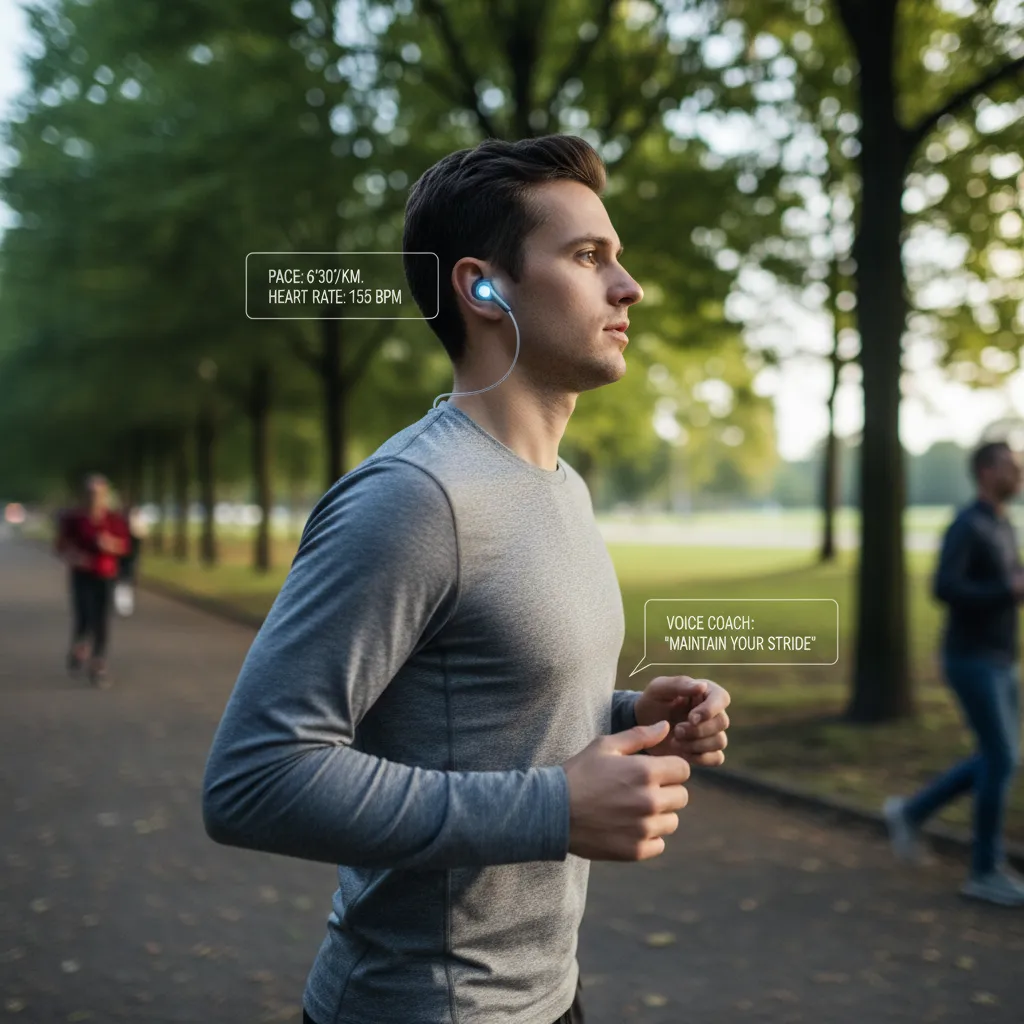
- Real-Time Translation: AI-powered earbuds can listen to a foreign language and provide an instant translation directly in your ear, breaking down communication barriers in international business.
- Voice-Activated AI Assistants: Access powerful AI models like ChatGPT or Google’s Gemini on the fly. You can draft emails, brainstorm ideas, or get complex questions answered, all through your earbuds.
- Focus and Noise Cancellation: Advanced AI algorithms can intelligently identify and cancel out distracting noises while allowing important sounds, like a colleague’s voice, to pass through.
Breaking Down Barriers: How AI Wearables Champion Accessibility
Perhaps the most profound impact of AI wearables is in the realm of accessibility. For millions of people with disabilities, these devices are not just conveniences; they are life-changing tools that foster independence and connection. This is where accessibility tech innovation truly shines.
A New Vision: Smart Glasses for the Visually Impaired
For individuals with visual impairments, navigating the world can be a constant challenge. AI-powered smart glasses are emerging as a revolutionary form of assistive tech wearables.
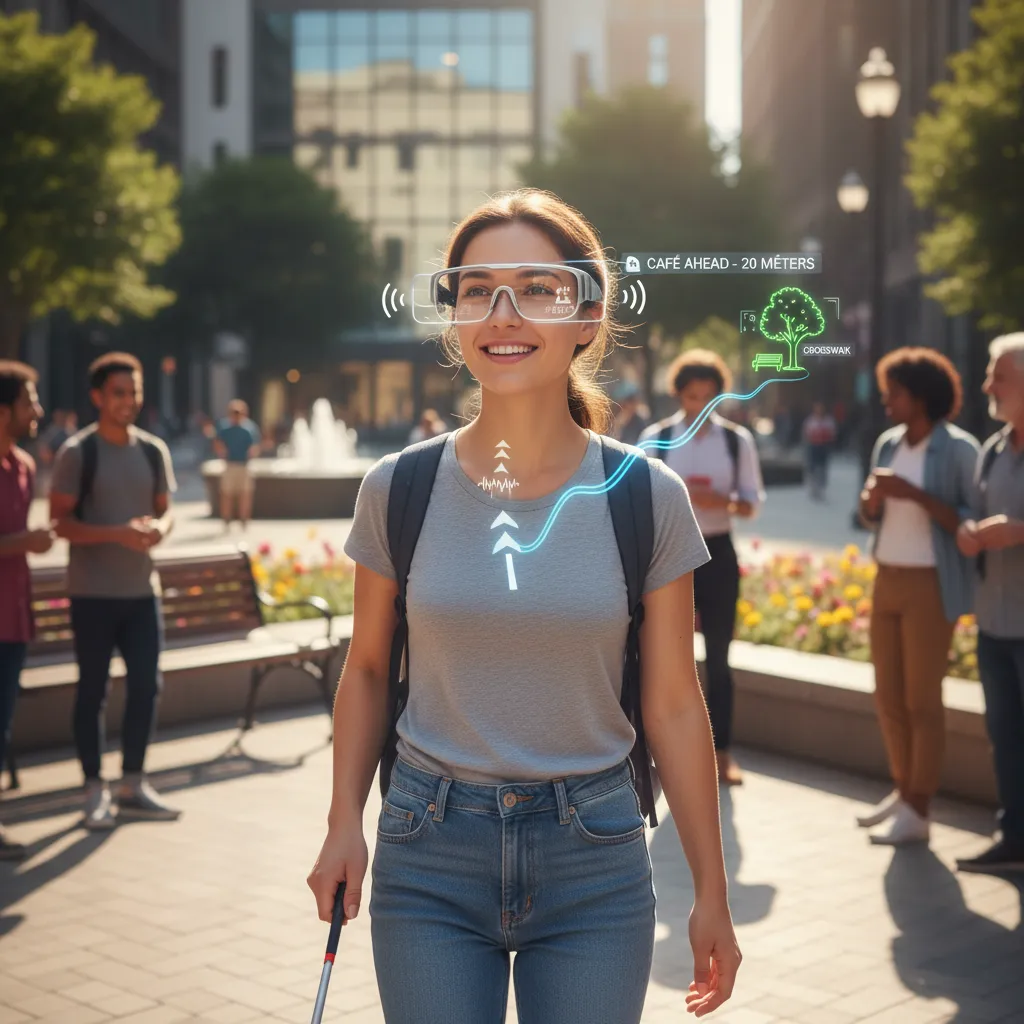
These devices use an onboard camera and AI software to see and interpret the world for the wearer. Key features that enhance smart glasses accessibility include:
- Object and Facial Recognition: The glasses can identify friends, family members, and everyday objects, announcing them to the user.
- Real-Time Text Reading: Using Optical Character Recognition (OCR), the AI can read menus, street signs, and documents aloud.
- Navigation Assistance: By describing obstacles, crosswalks, and building entrances, the glasses provide a new layer of environmental awareness.
- Remote Human Assistance: Some services connect the wearer to a live agent who can see through the device’s camera and provide guidance in complex situations.
Enhanced Hearing and Communication
The technology behind hearing aids AI has become remarkably sophisticated. Modern hearing aids use AI to perform complex audio processing that was previously impossible in such a small form factor.
AI algorithms can analyze the soundscape in real-time, isolating a specific speaker’s voice in a noisy restaurant while dampening background clatter. They can automatically adjust settings as you move from a quiet office to a busy street. Some even incorporate fall detection and can translate languages, making them multifaceted health and communication devices.
Related: Apple Intelligence: Top AI Features Coming to iOS 18
Smart Garment Technology and Haptic Feedback
The innovation doesn’t stop at our heads and hands. Smart garment technology embeds wearable sensors and haptic feedback motors directly into clothing. This can be used to create sensory substitution systems, such as a vest that vibrates to guide a person with visual impairments or haptic sleeves that help someone with motor control issues perform physical therapy exercises with the correct form.
The Convergence of Health and AI: Personalized Wellness on Your Wrist (and Beyond)
The wearable health tech sector is arguably the most mature and impactful segment of the wearable device market. AI has transformed these devices from simple fitness trackers into 24/7 personal health monitors, providing insights that can help prevent serious health issues.
From Reactive to Predictive Health Monitoring
The most significant shift in wearable health tech is the move from reactive to predictive monitoring. Instead of just telling you your heart rate, advanced smartwatch AI features analyze trends and anomalies in your biometric data to alert you to potential problems before they become critical.
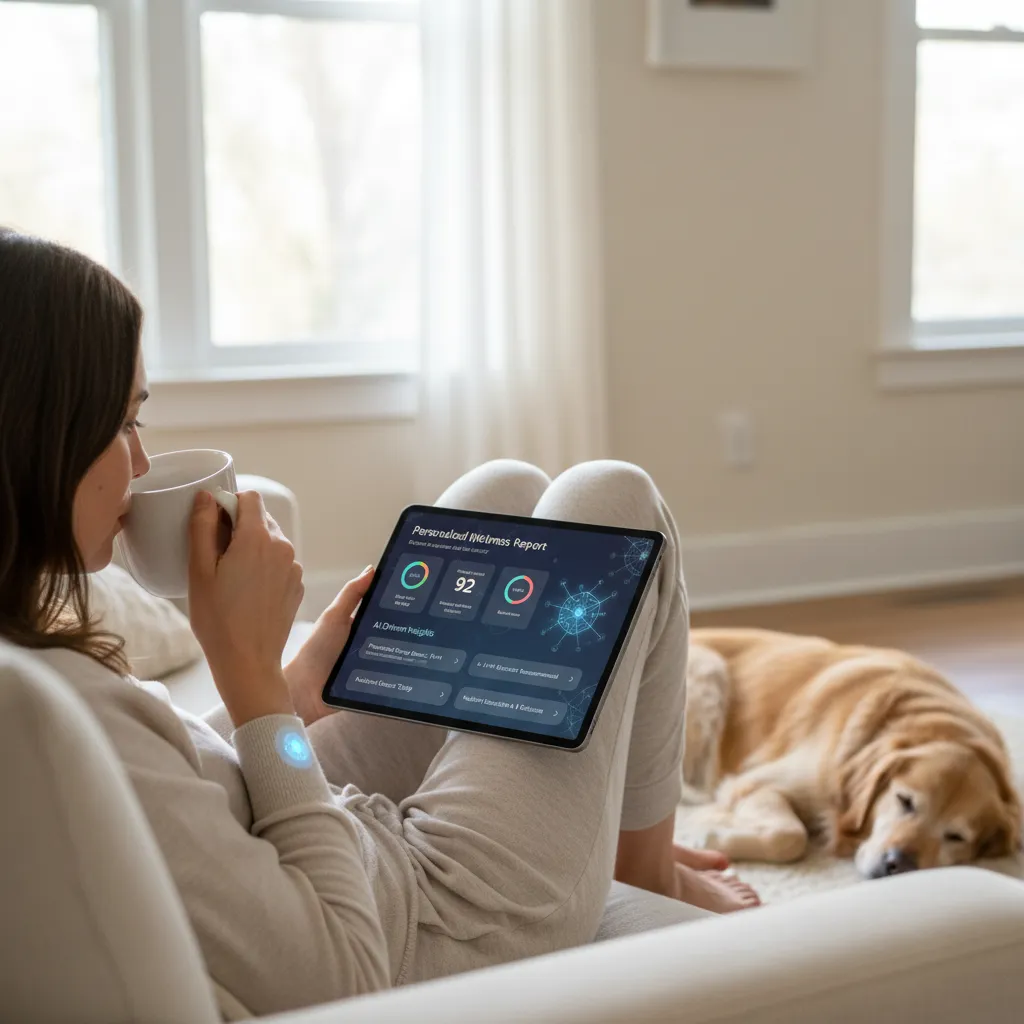
- Atrial Fibrillation (AFib) Detection: AI algorithms approved by health regulators can monitor heart rate rhythm and alert users to signs of AFib, a leading cause of stroke.
- Sleep Apnea Clues: By analyzing blood oxygen (SpO2) levels and breathing disturbances during sleep, some wearables can identify risks associated with conditions like sleep apnea.
- Stress and Readiness Scores: AI synthesizes data from heart rate variability (HRV), sleep quality, and recent activity to provide a “readiness” or “stress” score, helping users decide whether to push hard in a workout or prioritize recovery.
Related: AI in Longevity: Unlocking the Secrets to a Longer, Healthier Life
The Future of Wearables: What’s Next on the Horizon?
As exciting as current technology is, we are only scratching the surface. The future of wearables is moving towards even more seamless, integrated, and powerful devices that will feel less like technology we wear and more like a natural extension of ourselves. Keeping an eye on wearable technology trends reveals a fascinating roadmap.
Brain-Computer Interfaces (BCIs) and Wearable Neurotech
The next frontier is wearable neurotech. Companies are developing non-invasive headbands and earbuds with EEG sensors that can monitor brainwave activity. Early applications focus on:
- Focus Tracking: Measuring cognitive load to help users understand their focus patterns and create more productive work environments.
- Meditation and Mental Wellness: Providing real-time feedback on brain activity during meditation to help users achieve deeper states of relaxation.
- Assistive Control: In the long term, BCIs could allow users with severe motor impairments to control computers, prosthetic limbs, or wheelchairs with their thoughts.
Smart Textiles and Bio-Integrated Sensors
Smart garment technology will become more advanced and less conspicuous. Imagine clothing with integrated sensors that continuously monitor your vitals, posture, and even analyze your sweat for biomarkers. These “smart skins” or bio-integrated patches could provide a continuous stream of health data to you and your doctor, making healthcare truly proactive.
Related: AI in Drug Discovery: Revolutionizing Modern Medicine
The Ambient Computing Ecosystem
Ultimately, individual wearable AI devices will dissolve into a unified “ambient computing” ecosystem. Your smart glasses, earbuds, and ring will work in perfect harmony, orchestrated by a central AI personal assistant that understands your context and anticipates your needs. Information will appear exactly when and where you need it, and tasks will be completed with minimal conscious input.
Challenges and Ethical Considerations
With great power comes great responsibility. The rapid growth of the wearable device market brings critical challenges that must be addressed:
- Data Privacy: Wearables collect some of the most intimate data imaginable. Ensuring this data is secure and used ethically is paramount.
- Algorithmic Bias: AI models are trained on data. If this data is not diverse and representative, it can lead to health insights or accessibility features that work less effectively for certain demographics.
- Over-reliance and Digital Wellbeing: As these devices become more integrated into our lives, we must be mindful of maintaining a healthy balance and avoiding an “always-on” culture that can lead to burnout.
Conclusion
AI wearables have graduated from niche gadgets to transformative tools that are reshaping how we work, live, and interact with the world. They offer a powerful toolkit for AI driven productivity, enabling professionals to achieve new levels of focus and efficiency through hands-free computing. More importantly, they are pioneering new forms of assistive tech wearables, breaking down long-standing barriers and fostering a more inclusive and accessible society.
From the discreet power of a smart ring to the life-changing potential of AI-powered glasses, this technology is augmenting human capability in profound ways. As we look toward a future of wearable neurotech and ambient computing, one thing is clear: the most personal technology we’ve ever known is just getting started.
What AI wearable feature are you most excited to see become mainstream? Share your thoughts in the comments below!
FAQs
Q1. What is an AI wearable?
An AI wearable is a smart electronic device that can be worn on the body, such as a smartwatch, smart ring, or glasses, that is equipped with artificial intelligence. Unlike standard wearables that just collect data, AI wearables use machine learning algorithms to analyze that data, understand context, learn user patterns, and provide proactive, personalized assistance for tasks related to productivity, health, and accessibility.
Q2. How do AI wearables improve productivity?
AI wearables boost productivity primarily through hands-free computing and context-aware assistance. They allow users to access information, manage notifications, and communicate using voice commands or simple gestures, minimizing distractions from phones or computers. Features like real-time translation in AI earbuds, quick replies from a smart ring, and data overlays in smart glasses streamline workflows and reduce time spent on manual tasks.
Q3. What are some examples of AI wearable devices?
Common examples include smartwatches like the Apple Watch with its AI-powered health monitoring, smart rings like the Oura Ring for sleep and activity analysis, AI earbuds that offer live translation and voice assistant access, and smart glasses that use AI for navigation and object recognition for the visually impaired. Emerging categories also include smart garment technology (clothing with embedded sensors) and wearable neurotech devices.
Q4. How is AI used for accessibility in wearables?
AI is a cornerstone of modern accessibility tech innovation in wearables. For example, AI-powered smart glasses can “see” for the visually impaired by describing their surroundings and reading text aloud. In advanced hearing aids, AI isolates specific voices in noisy environments. Smart garments can use haptic feedback to help with navigation or guide physical therapy movements, making AI wearables powerful tools for independence.
Q5. What is the future of wearable AI?
The future of wearable AI points towards more seamless and predictive technology. Key trends include the development of wearable neurotech (brain-computer interfaces) for controlling devices with thought, bio-integrated sensors that are like a “smart skin” for continuous health monitoring, and an ambient computing environment where all your devices work together intelligently in the background to anticipate your needs.
Q6. Are AI wearables safe to use?
Reputable manufacturers design AI wearables with user safety in mind, adhering to electronic device standards. However, the primary safety concern revolves around data privacy and security. These devices collect vast amounts of sensitive personal and biometric data. It is crucial for users to choose products from trusted brands with strong privacy policies and to be mindful of the permissions they grant to the device and its companion apps.