AI in Regenerative Agriculture: Farming Smarter for a Sustainable Future
Introduction
We stand at a critical crossroads. The global food system faces a monumental challenge: feeding a population projected to reach nearly 10 billion by 2050, while simultaneously combating the escalating climate crisis and healing our planet’s depleted ecosystems. Conventional agriculture, for all its productivity, has often come at a significant environmental cost. But what if we could shift from merely sustaining our resources to actively regenerating them?
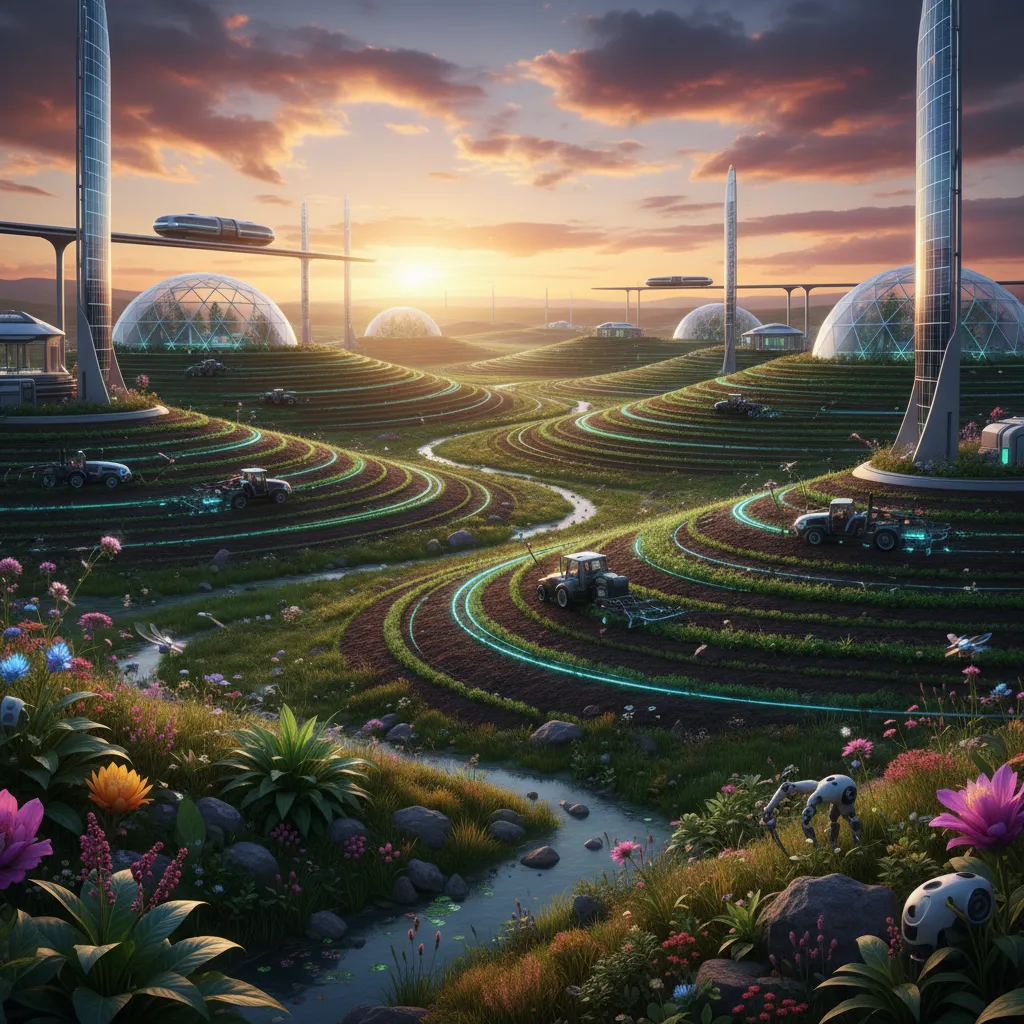
Enter regenerative agriculture, an ecological approach to farming that aims to restore soil health, enhance biodiversity, and sequester carbon from the atmosphere. It’s a philosophy rooted in working with nature, not against it. Now, couple this ancient wisdom with the most powerful technology of our time: Artificial Intelligence. This isn’t science fiction; it’s the next frontier. The fusion of regenerative agriculture AI is creating a paradigm shift, transforming farms into intelligent ecosystems.
This article explores the powerful synergy between AI and regenerative farming. We’ll dive into how smart farming solutions are optimizing ancient practices, making them more efficient, scalable, and profitable. You’ll learn how precision agriculture technology is breathing new life into our soils, conserving precious water, and paving the way for truly sustainable food systems. This is the story of the future of farming technology—a future that is both incredibly high-tech and deeply connected to the earth.
Beyond Sustainability: A Quick Primer on Regenerative Agriculture
Before we plug in the AI, it’s crucial to understand the ground it’s working on. The term “sustainable” often implies maintaining the status quo—not making things worse. Regenerative agriculture goes a giant leap further. Its primary goal is to improve and rebuild. It’s a holistic system that views a farm as an integrated ecosystem.
The core principles of regenerative agriculture include:
- Minimize Soil Disturbance: Reducing or eliminating tilling (no-till farming) protects the soil structure and the intricate web of microbial life within it. This prevents erosion and keeps carbon locked in the ground.
- Maximize Crop Diversity: Moving away from monocultures to planting diverse crops (polycultures) breaks pest cycles, improves soil nutrition, and creates more resilient systems.
- Keep the Soil Covered: Planting “cover crops” like clover or vetch during off-seasons protects the soil from erosion, suppresses weeds, and adds valuable organic matter.
- Maintain Living Roots Year-Round: Constant root activity feeds the soil microbiome, which is the engine of a healthy farm ecosystem.
- Integrate Livestock: Managed grazing can be a powerful tool to naturally fertilize soil, manage vegetation, and mimic natural ecosystem patterns.
This approach transforms farms from resource extractors into carbon sinks, biodiversity havens, and producers of more nutrient-dense food. The challenge has always been managing its complexity at scale. This is precisely where AI makes its grand entrance.
The Digital Seed: How AI is Revolutionizing Farming
At its core, Artificial Intelligence in agriculture is about one thing: transforming massive amounts of data into intelligent, actionable insights. Farms are incredibly data-rich environments, and AI provides the tools to listen to what the land, crops, and climate are saying.
Key technologies driving this revolution include:
- Machine Learning (ML): Algorithms that analyze historical and real-time data to predict outcomes, such as crop yield, disease outbreaks, or nutrient deficiencies.
- Computer Vision: AI systems that “see” and interpret the world through cameras on drones, satellites, or tractors. They can identify a single weed in a thousand plants or spot the subtle discoloration of a nutrient-starved leaf.
- Predictive Analytics: Using data to forecast future conditions, allowing farmers to be proactive rather than reactive, whether it’s anticipating a pest infestation or optimizing irrigation schedules before a drought.
- Robotics & Automation: The physical embodiment of AI insights, from drones that apply beneficial insects to lightweight, autonomous farm equipment that weeds fields with pinpoint accuracy.
When you apply this powerful toolkit to the principles of regenerative agriculture, the results are groundbreaking.
The Perfect Symbiosis: Core Applications of AI in Regenerative Practices
AI isn’t replacing the farmer’s wisdom; it’s augmenting it. It provides the microscopic and macroscopic view needed to manage the beautiful complexity of a regenerative system.
Rebuilding the Foundation: AI for Soil Health and Carbon Sequestration
Soil is the heart of regenerative agriculture. Healthy soil is a living, breathing ecosystem teeming with billions of microbes. Managing it for optimal health is a complex art.
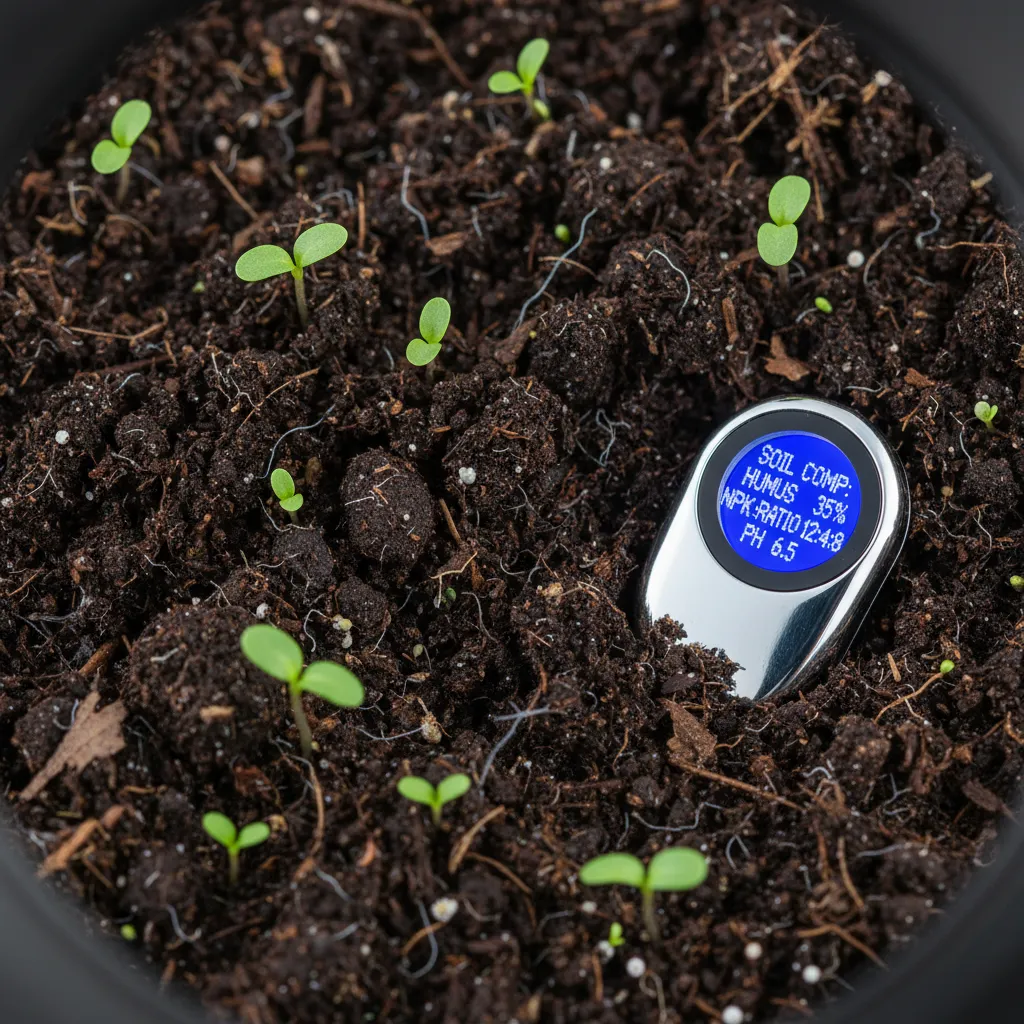
The Challenge: Soil composition, moisture, and microbial life can vary dramatically from one foot to the next. Traditional soil testing is infrequent and provides only a snapshot.
The AI Solution: AI for soil health is a game-changer. In-field sensors connected to ML platforms continuously monitor soil organic matter, moisture levels, nutrient content, and even microbial activity in real-time. This data driven farming approach allows farmers to create hyper-detailed soil maps. AI models can then analyze this data to recommend specific cover crop mixes for different zones or predict how no-till practices are impacting carbon sequestration farming over time. This data provides verifiable proof of the farm’s positive environmental impact farming AI, potentially opening up new revenue from carbon credits. Related: Sustainable AI: Eco-Friendly Innovation for a Greener Digital Future
The View from Above: AI-Powered Crop Monitoring and Management
Regenerative farms thrive on diversity. Polycultures—growing multiple crops together—are fantastic for soil health and resilience but can be a management nightmare.
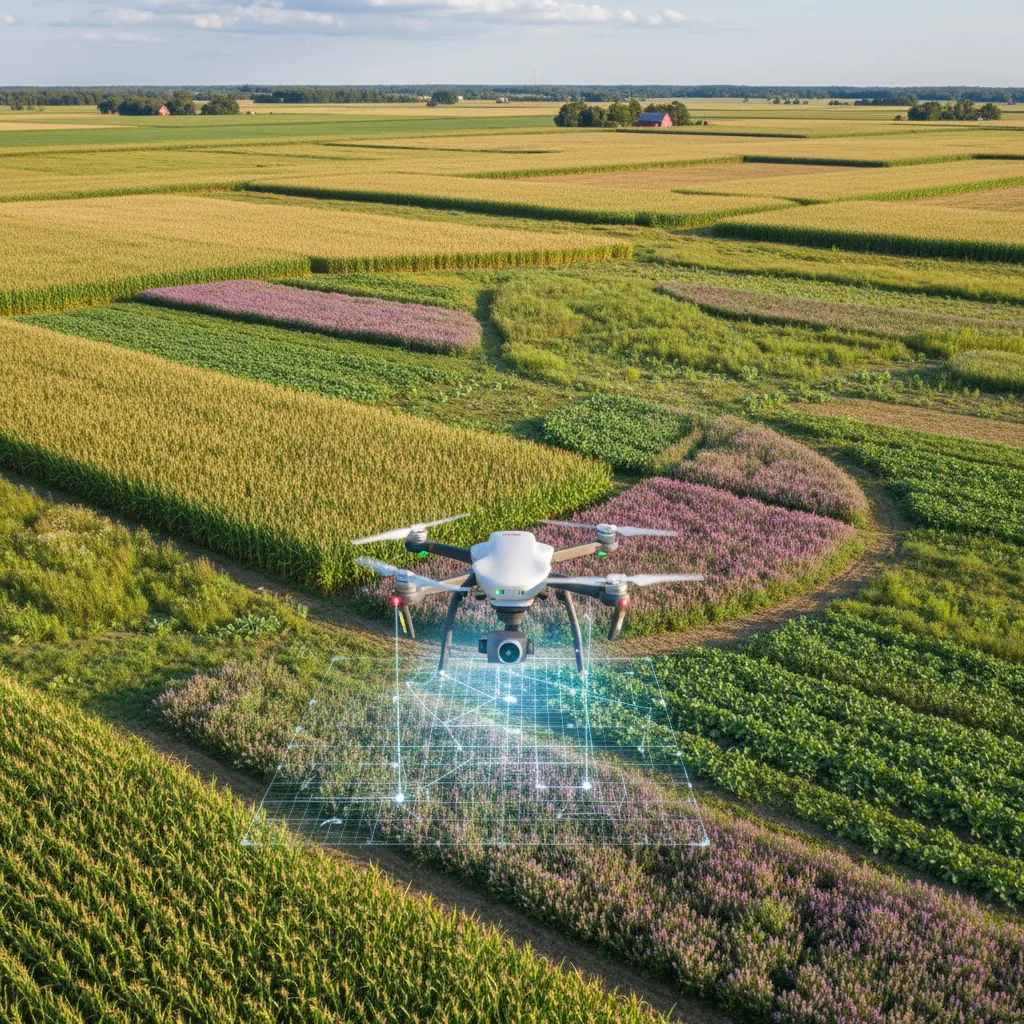
The Challenge: How do you effectively monitor the health of thousands of different plants across a vast area, each with unique needs?
The AI Solution: Enter crop monitoring AI. Drones and satellites equipped with hyperspectral cameras fly over fields, capturing data far beyond what the human eye can see. Computer vision algorithms analyze these images to:
- Identify Stress Early: Detect water stress or nutrient deficiencies in plants days before they show visible signs, allowing for precise intervention.
- Enable Precision Weeding: Distinguish between cash crops and weeds, guiding robotic weeders to remove pests without herbicides, which is crucial for biodiversity in agriculture AI.
- Perform Pest Detection: Identify early signs of pest infestations or disease, enabling targeted application of organic treatments instead of broad-spectrum pesticides.
This level of monitoring makes complex, biodiverse planting schemes manageable and profitable, directly supporting the goal of crop yield optimization AI within a regenerative framework.
Smart Sips: Precision Irrigation and Water Conservation
Water is a finite resource, and regenerative agriculture aims to improve the soil’s ability to absorb and retain it. AI takes this resource efficiency farming to the next level.
The Challenge: Traditional irrigation often relies on fixed schedules, leading to wasted water and runoff that can carry valuable topsoil and nutrients away.
The AI Solution: Precision irrigation AI systems create a closed-loop of intelligence. They synthesize data from soil moisture sensors, real-time weather forecasts from satellite data, and the specific water needs of different crops at various growth stages. The AI then controls the irrigation system to deliver exactly the right amount of water to the right place at the right time. This AI for water conservation not only saves a precious resource but also prevents soil erosion and ensures every drop is used to build a healthier, more resilient farm ecosystem. Related: Sustainable Tech Innovations: Greener Gadgets and Eco-Smart Living
Autonomous Allies: Robotics and Smart Equipment in the Field
A key principle of regenerative farming is minimizing soil compaction caused by heavy machinery. Lighter, smarter machines are the answer.
The Challenge: Many regenerative tasks, like managing cover crops or weeding without chemicals, can be labor-intensive.
The AI Solution: The field of robotics in agriculture is exploding. We’re seeing the rise of small, lightweight, autonomous robots that can perform a variety of tasks with surgical precision:
- Micro-Spraying: Instead of spraying an entire field, these robots identify a specific pest and apply a targeted micro-dose of organic pesticide.
- Mechanical Weeding: AI-guided tools can pluck or zap weeds individually, eliminating the need for herbicides that harm soil life.
- Data Collection: These robots serve as mobile sensor platforms, gathering granular data at the plant level.
This AI driven farm management reduces the reliance on heavy tractors, protects the delicate soil structure, and automates difficult tasks, making regenerative practices more feasible for farms of all sizes. Related: The Rise of AI Robots: How Intelligent Automation is Reshaping Industries
The Data-Driven Harvest: Economic and Environmental Benefits
The synergy of AI and regenerative agriculture isn’t just ecologically sound; it’s economically intelligent. It addresses both the planet’s health and the farmer’s bottom line.
Boosting the Bottom Line: The Economic Case
For too long, sustainable practices have been perceived as less profitable. AI is flipping that narrative on its head.
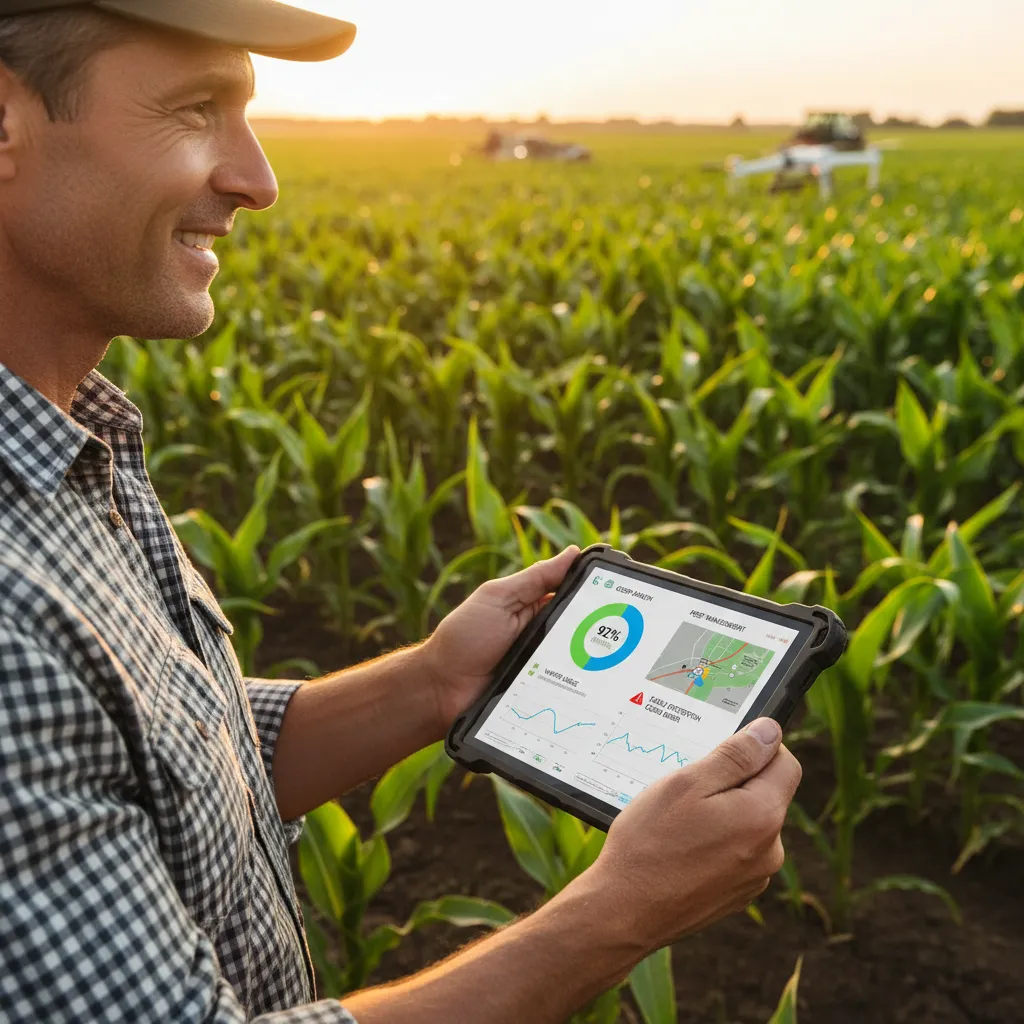
The economic benefits regenerative agriculture powered by AI are substantial:
- Reduced Input Costs: Precision application of water, fertilizers, and pest control means farmers buy and use significantly less, directly cutting operational expenses.
- Increased Yields and Resilience: Healthier soil and proactive management lead to more consistent and often higher yields. Biodiverse farms are also more resilient to climate shocks like drought or flooding.
- Access to Premium Markets: AI helps provide the data-backed verification needed to certify products as “regeneratively grown,” which can command a premium price from environmentally conscious consumers.
- New Revenue Streams: Data proving carbon sequestration can be sold on carbon markets, creating an entirely new income source for the farm.
Healing the Planet: The Environmental Impact
The environmental payoff is the true legacy of this technological marriage. By optimizing regenerative principles, AI amplifies the positive impact on a global scale.

We see a clear path to:
- Aggressive Carbon Drawdown: AI helps maximize the soil’s ability to act as a carbon sink, directly reducing carbon footprint agriculture.
- Enhanced Biodiversity: Minimizing chemical use and encouraging polycultures creates a thriving habitat for pollinators, beneficial insects, and wildlife.
- Improved Water Cycles: Healthy soil absorbs more water, recharging aquifers and reducing flood risk. Precision irrigation ensures clean water isn’t wasted.
- A Move Toward Circularity: This system is a prime example of circular agriculture practices, where waste is minimized and resources are constantly recycled within the farm ecosystem. Related: Sustainable Cooking: Your Guide to Eco-Friendly Kitchen Hacks
Navigating the Future: Challenges and the Road Ahead
The path to an AI-powered regenerative future is promising, but not without its hurdles. Key challenges include the high initial investment for sensors and robotics, the need for reliable internet connectivity in rural areas, and the skills gap for managing these advanced systems.
The future will be defined by agricultural AI startups that are developing more affordable and user-friendly solutions. We’ll see deeper integration of AI across the entire food supply chain, from seed genetics to consumer plates. Innovations in vertical farming AI will bring regenerative principles into urban environments, further securing our future of food production.
The goal is democratization—making this powerful sustainable agriculture innovation accessible not just to large agribusinesses but to the small and medium-sized family farms that are the backbone of our global food system.
Conclusion
The fusion of artificial intelligence and regenerative agriculture is more than just an agriculture technology trend; it represents a fundamental rethinking of our relationship with the land. It’s a marriage of ancient ecological wisdom and futuristic computational power. AI gives us the tools to understand and manage the complexity of nature at a scale never before possible.
We are moving beyond the simple goal of producing more food and into an era where we can produce better food while actively healing our planet. By empowering farmers with data-driven insights, we are enabling them to become the frontline stewards of ecological restoration. The future of farming isn’t about choosing between technology and tradition; it’s about using technology to amplify the very best of tradition. The soil is our foundation, and with AI as our partner, we can regenerate it for generations to come.
Frequently Asked Questions (FAQs)
How is AI specifically used in regenerative agriculture?
AI is used to enhance core regenerative principles. For example, AI-powered sensors and machine learning models analyze soil health in real-time (AI for soil health), drones with computer vision provide precise crop monitoring AI for diverse crops, and smart systems enable precision irrigation AI to conserve water. It essentially makes the complex management of a regenerative ecosystem more efficient and data-driven.
What is the main goal of regenerative agriculture?
The main goal is to go beyond sustainability by actively improving and restoring the farm’s ecosystem. This includes rebuilding soil organic matter, increasing biodiversity, improving the water cycle, and sequestering carbon from the atmosphere, ultimately leading to more resilient farms and a healthier planet.
Can AI help reverse climate change through farming?
AI can be a powerful tool in the fight against climate change. By optimizing regenerative practices like no-till and cover cropping, regenerative agriculture AI helps maximize the amount of carbon pulled from the atmosphere and stored in the soil (carbon sequestration farming). This data-verified process can turn farms into significant carbon sinks.
What are the biggest challenges to adopting AI in farming?
The primary challenges include the high initial cost of technology like drones, sensors, and robotics. Additionally, a lack of reliable, high-speed internet in many rural areas can be a major barrier. There is also a need for training and developing new skills for farmers and farmworkers to effectively use these complex smart farming solutions.
Is AI-driven regenerative farming profitable for farmers?
Yes, it can be highly profitable. The economic benefits of regenerative agriculture are amplified by AI through significantly reduced input costs (water, fertilizer, pesticides), improved crop yields, and greater resilience to climate events. Furthermore, AI provides the data to access premium markets and new revenue streams like carbon credits.
What’s the difference between precision agriculture and regenerative agriculture?
Precision agriculture technology focuses on using data and technology to optimize inputs and efficiency, often within a conventional farming model (e.g., precise fertilizer application on a cornfield). Regenerative agriculture is a holistic philosophy focused on improving the entire ecosystem. AI acts as a bridge, using precision tools to achieve regenerative outcomes, making them a powerful combination rather than opposing concepts.