AI’s Brave New World: Autonomous Robots Conquering Extreme Environments
Introduction
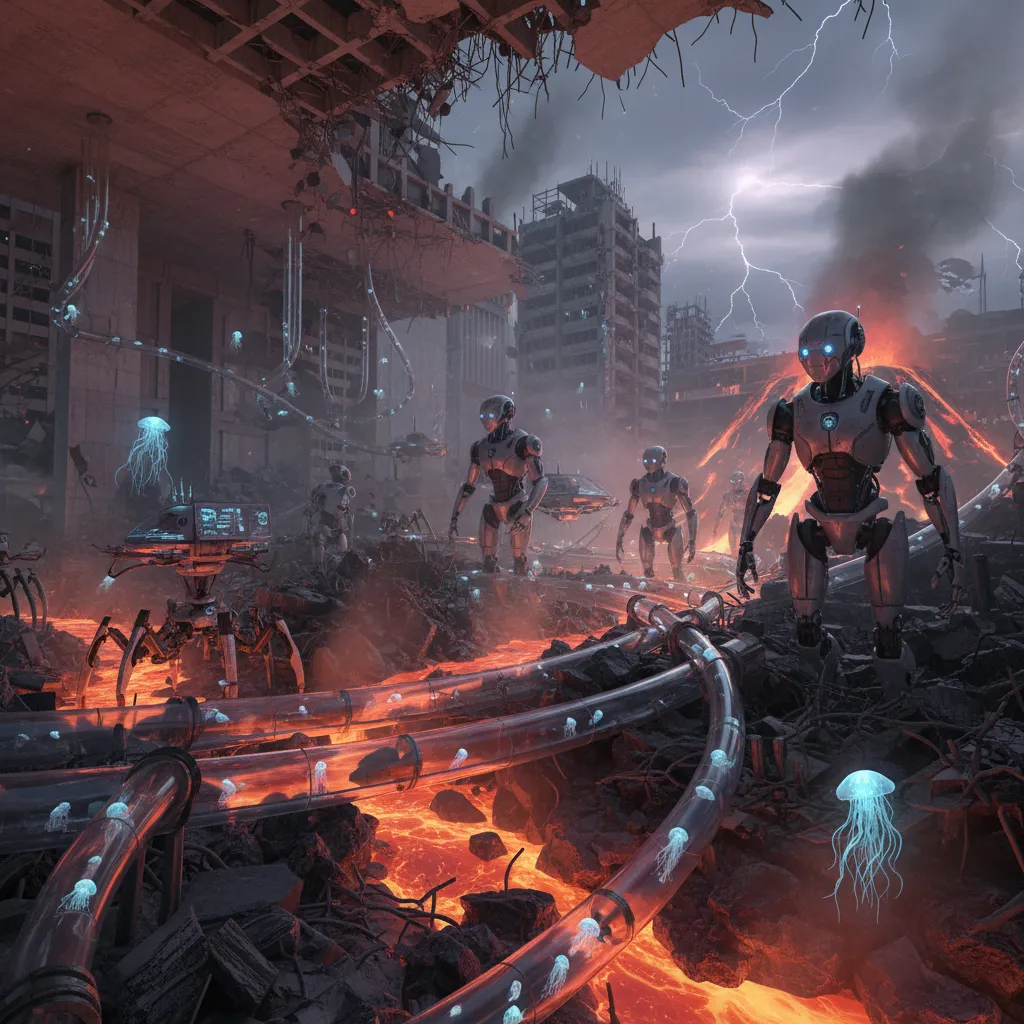
Picture the crushing pressure of the Mariana Trench, the lethal radiation of a failed nuclear reactor, or the thin, hostile atmosphere of Mars. These are places where human life is measured in seconds, not hours. For centuries, our ambition to explore and understand these realms has been checked by the limits of our own biology. But a new era is dawning. This is the age of AI robots for extreme environments, a time when our proxies—intelligent, resilient, and autonomous—go where we cannot.
The convergence of advanced robotics and artificial intelligence has unlocked a new paradigm for exploration, rescue, and industry. These aren’t the remote-controlled toys of the past; they are autonomous systems capable of making their own decisions, navigating treacherous landscapes, and performing complex tasks without a human hand to guide their every move. From disaster zones to distant planets, these unmanned systems in extreme conditions are becoming our eyes, hands, and scientific instruments in the most hazardous places imaginable.
This article delves into the brave new world of robotics in hazardous environments. We’ll explore the groundbreaking applications changing our world, the core AI technologies that make it all possible, the immense challenges that still lie ahead, and the profound implications for the future of autonomous systems.
Why Send a Robot? The Unmistakable Case for Autonomy in Harsh Conditions
The primary driver for deploying autonomous robots in challenging conditions is brutally simple: human safety. Every year, workers in industries like mining, disaster relief, and infrastructure maintenance face life-threatening risks. By sending a machine to perform these hazardous operations, we can remove people from harm’s way entirely.
But the benefits extend far beyond safety:
- Superhuman Endurance: An AI-driven robot doesn’t get tired, distracted, or suffer from fatigue. It can operate 24/7 in conditions of extreme heat, cold, or pressure, performing tasks with a level of precision and consistency that a human in a bulky hazard suit could never match.
- Unprecedented Data Collection: These autonomous exploration vehicles are equipped with sensors far more sensitive than our own. They can see in infrared, detect faint chemical signatures, and map environments with millimeter accuracy, gathering vast datasets from previously inaccessible locations.
- Enhanced Efficiency: In scenarios like nuclear decommissioning or deep-sea mining, robots can perform tasks faster and more accurately, reducing operational time and long-term costs. This is a cornerstone of AI-powered industrial automation.
- Executing Critical Missions: When a mission is too dangerous or complex for direct human intervention, such as disabling an explosive device or containing a chemical spill, AI-powered robots become indispensable assets for these AI for critical missions.
This growing reliance on machines is fostering a new dynamic of human-robot collaboration in hazardous environments, where human experts oversee and direct fleets of autonomous agents from a safe distance, making strategic decisions based on the rich data the robots provide.
The New Frontiers: AI Robots in Action Across Earth and Beyond
The applications for these resilient systems are as vast and varied as the extreme environments they are built to conquer. We’re witnessing a revolution in real-time across multiple domains.
Plumbing the Depths: Deep-Sea Exploration Robotics AI
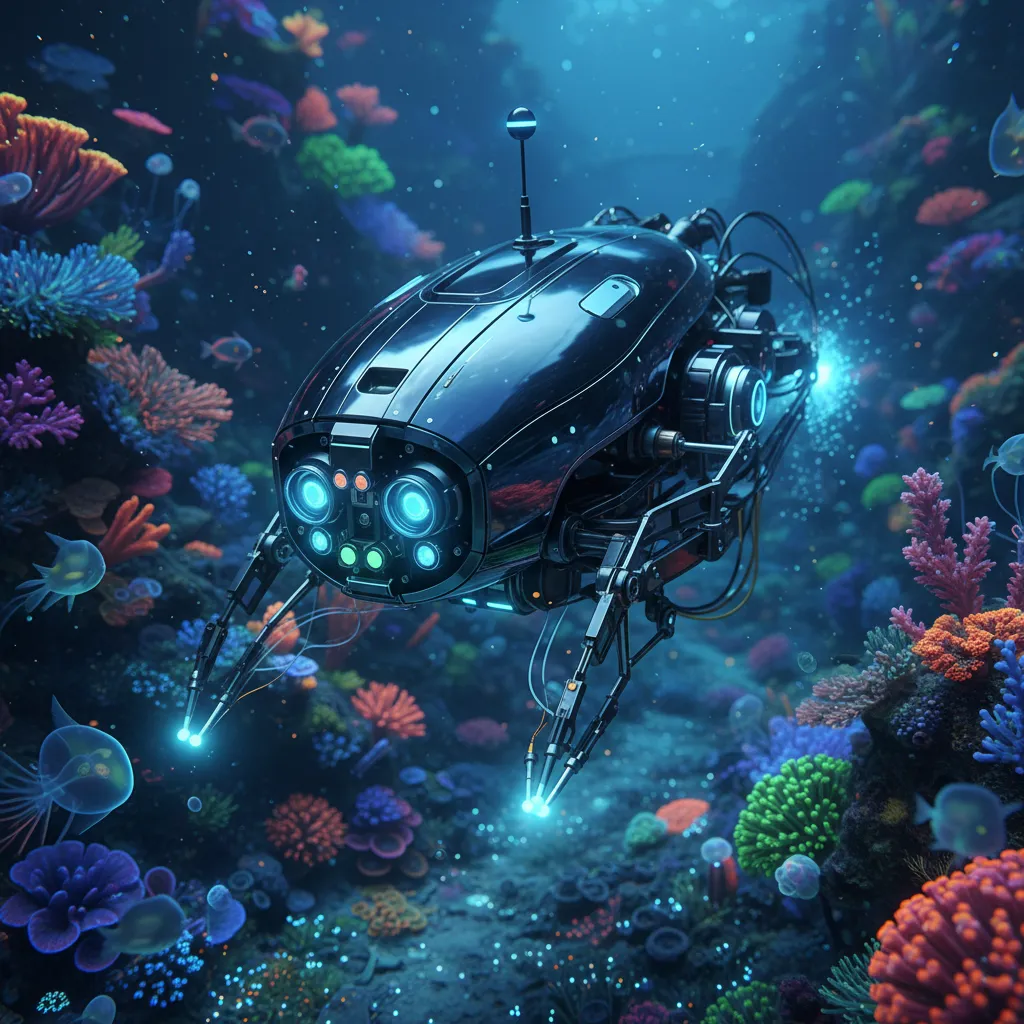
The deep ocean is arguably the least explored region of our own planet. The pressure is immense, there is zero light, and conventional communication like GPS is useless. This is where deep-sea exploration robotics AI truly shines. Autonomous Underwater Vehicles (AUVs) are now navigating the abyssal plains without tethers to a surface ship.
AI is the key. Algorithms for Simultaneous Localization and Mapping (SLAM) allow these AUVs to build detailed 3D maps of the ocean floor while simultaneously tracking their own position. Machine learning models trained on sonar and visual data can automatically identify hydrothermal vents, mineral deposits, or even new species of marine life, making exploration more efficient than ever.
The Final Frontier: Space Exploration Autonomous Robots
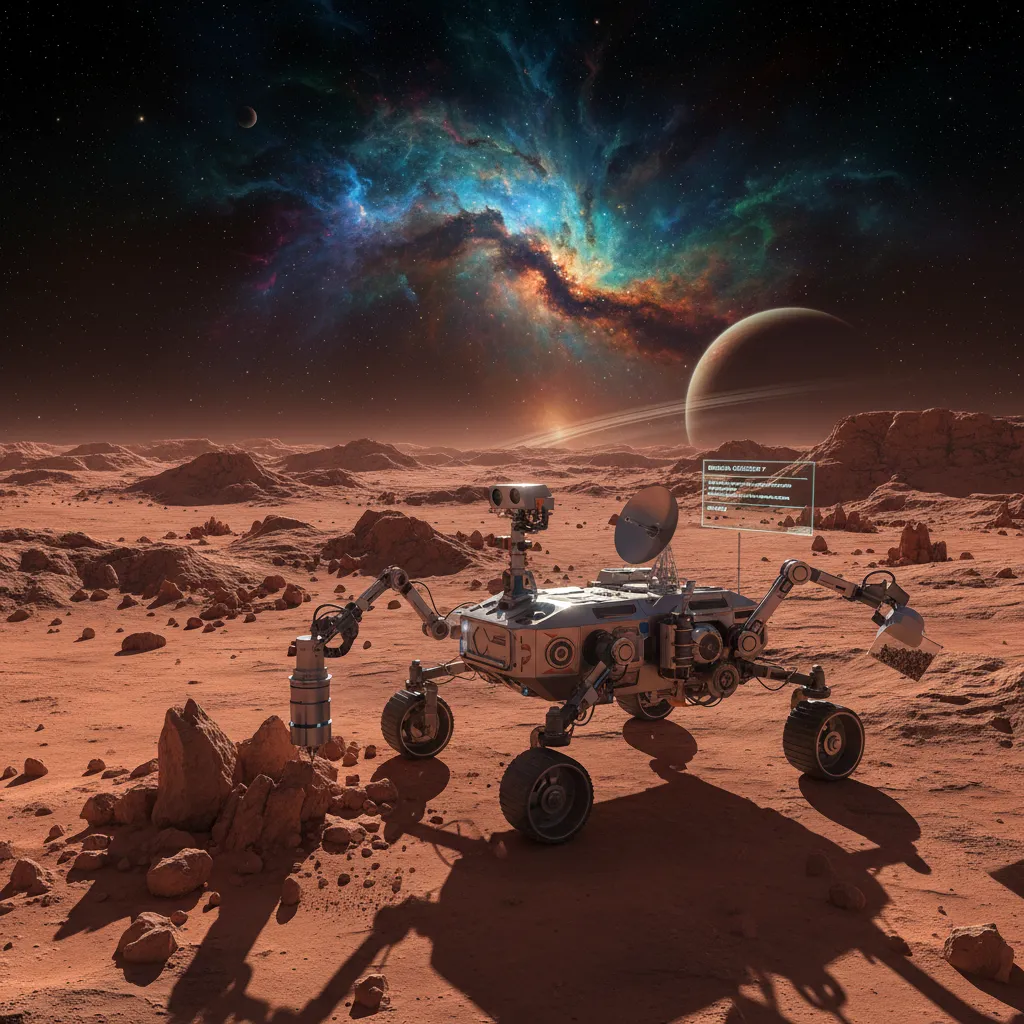
The 14-minute communication delay between Earth and Mars makes real-time control of a rover impossible. Space exploration autonomous robots like NASA’s Perseverance and Curiosity rovers are remarkable feats of AI-driven independence.
These rovers use AI to analyze terrain and plot the safest, most efficient path forward—a capability called “auto-nav.” They can identify scientifically interesting rock formations, decide to zap them with a laser for chemical analysis, and even diagnose their own mechanical issues. This level of autonomy is crucial for exploring distant moons and planets, making these machines true robotic geologists millions of miles from home.
After the Fall: AI for Disaster Relief and Search and Rescue Robotics
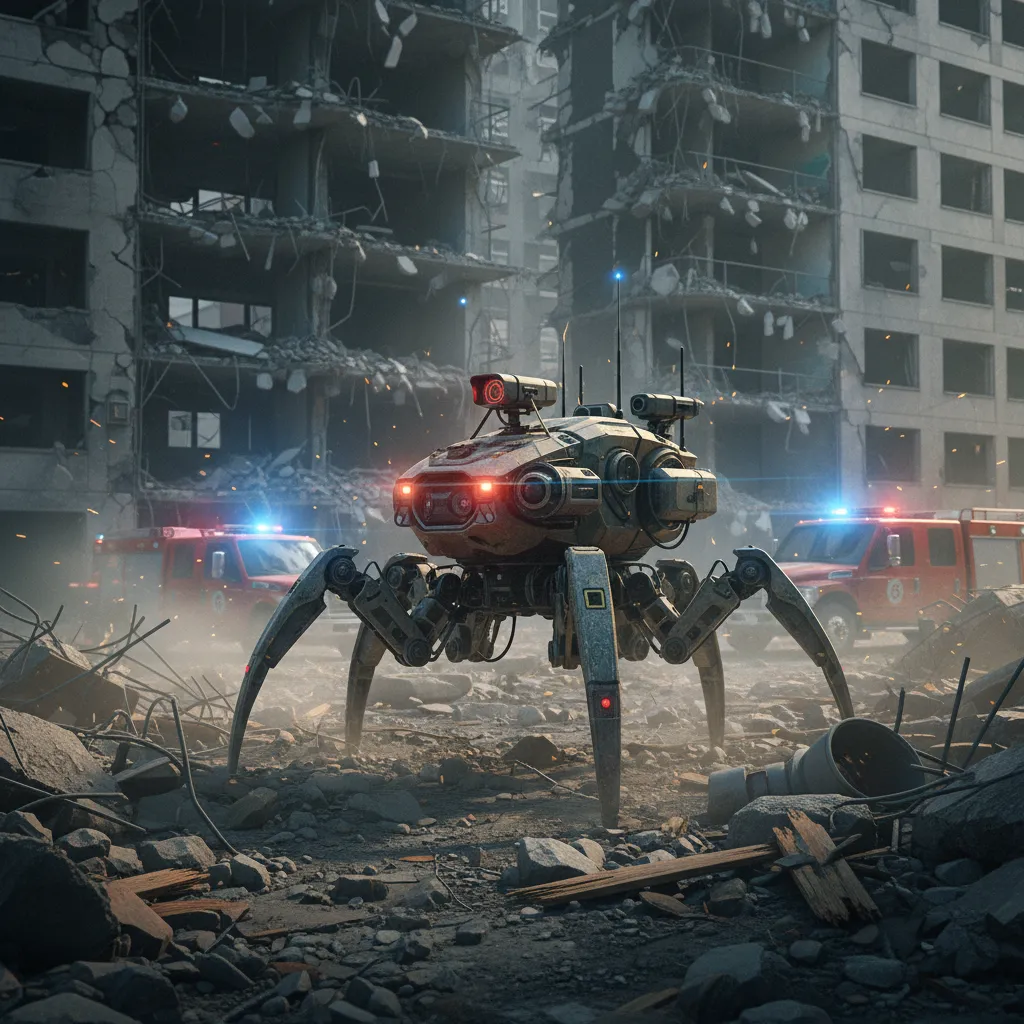
In the chaotic aftermath of an earthquake, hurricane, or building collapse, time is the most critical factor. The “golden hour” for finding survivors is often perilous for human rescuers. This is where the next-gen rescue robots are making a profound impact.
AI-driven search and rescue robotics come in many forms. Drones equipped with AI-powered computer vision can scan vast areas, identifying human shapes or heat signatures amidst the rubble. Legged robots, like those from Boston Dynamics, can traverse extreme terrain impassable for wheeled vehicles, entering unstable structures to provide a crucial first look. These systems build maps, identify structural hazards, and locate victims, allowing human teams to operate more safely and effectively.
Taming the Atom: Nuclear Inspection Robots AI
Nuclear power plants and waste sites are among the most dangerous man-made environments on Earth. For decades, decommissioning these facilities has been a slow, costly, and high-risk process. Nuclear inspection robots with AI are changing the equation.
These specially hardened robots can withstand intense radiation to map contamination levels, dismantle old infrastructure with robotic arms, and segment hazardous materials for safe removal. AI helps them navigate complex, unmapped reactor cores and perform delicate manipulation tasks, drastically reducing human exposure to lethal radiation.
The Engine Room: Core AI Technologies Powering Autonomous Systems
The incredible capabilities of these robots aren’t magic; they’re the result of a powerful fusion of AI software and advanced hardware. Several core technologies form the “brain” of these autonomous systems.
- Perception and Computer Vision: This is the robot’s sense of sight. Using cameras, LiDAR, radar, and thermal sensors, computer vision algorithms allow the robot to “see” and interpret its surroundings. It can recognize objects, detect obstacles, navigate pathways, and track changes in the environment.
- SLAM (Simultaneous Localization and Mapping): For environments where GPS is unavailable (underwater, underground, inside buildings, or on other planets), SLAM is essential. It’s the process by which a robot builds a map of an unknown area while simultaneously keeping track of its own position within that map.
- Reinforcement Learning (RL): This is a type of machine learning where an AI agent learns by doing. Through millions of trial-and-error simulations, an RL model can teach a robot how to walk over rubble, manipulate a complex tool, or optimize its energy consumption. It’s how robots learn complex physical skills.
- Predictive Maintenance: In a critical mission, a component failure can be catastrophic. AI algorithms constantly monitor the robot’s internal sensors (motor temperature, battery voltage, stress on joints) to predict when a part might fail before it happens, allowing for preventative repairs or a safe shutdown. These are the foundations of truly resilient autonomous systems.
Related: Llama 3.1 Guide: Meta’s New AI Challenger Explained
Beyond Exploration: The Industrial Revolution in Extreme Environments
The impact of these AI-powered robots extends well beyond pure science and rescue. They are spearheading a new industrial revolution in sectors traditionally defined by danger and difficulty.
Down to Earth: Robotics in Mining with AI
Deep subterranean mines are a prime example of a hazardous environment. Robotics in mining with AI is introducing a new level of safety and efficiency. Autonomous haul trucks, drills, and loaders can operate in dusty, unstable tunnels without a human driver. AI systems monitor seismic activity to predict rockfalls and use sensors to ensure air quality, creating a safer environment for the few human supervisors required on-site.
The High Wire Act: AI for Infrastructure Inspection
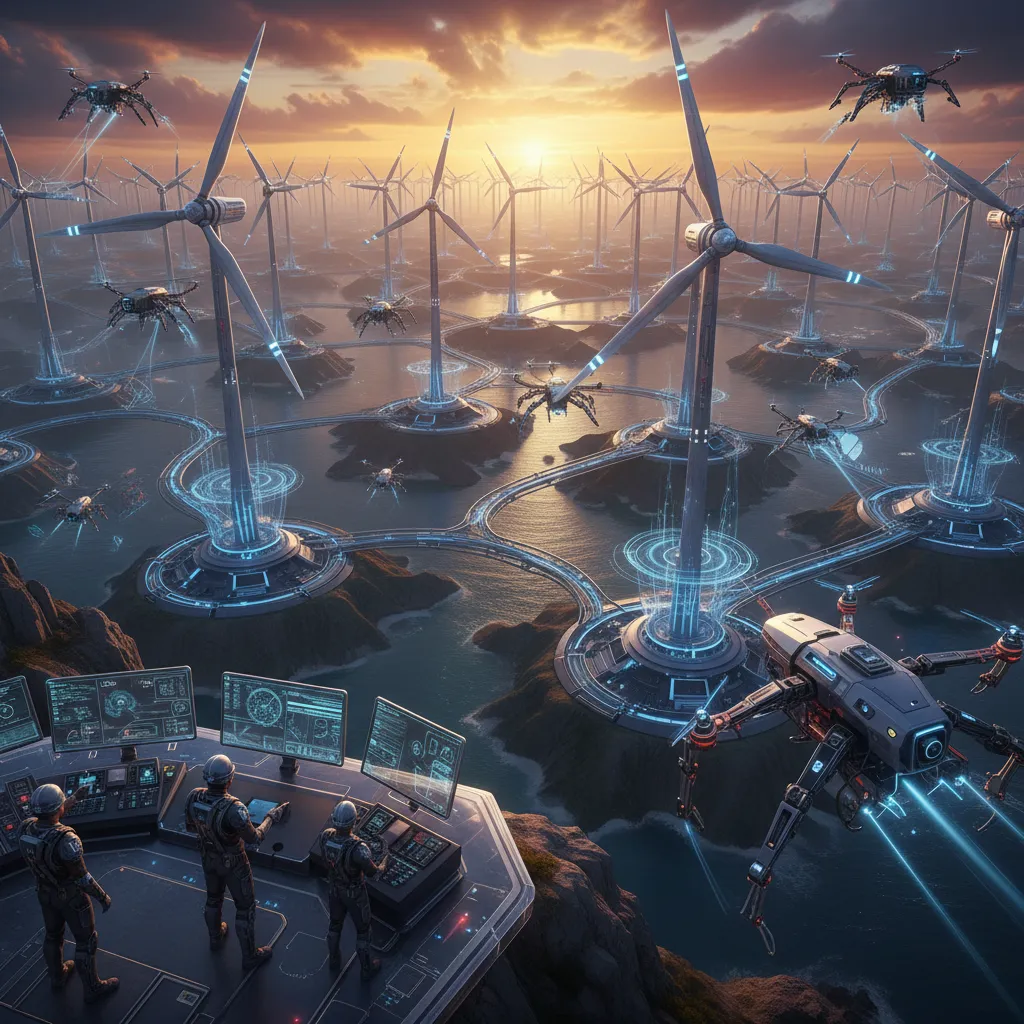
Maintaining our bridges, power lines, wind turbines, and railways is a dangerous and labor-intensive job. Today, autonomous drone applications are revolutionizing this field. Fleets of drones equipped with high-resolution cameras and AI analysis software can perform detailed inspections in a fraction of the time. The AI can automatically detect cracks, corrosion, and other structural defects that might be missed by the human eye, enabling proactive maintenance.
Guardians of the Planet: AI and Environmental Monitoring
Understanding climate change and its impact requires data from some of the most remote places on Earth. AI and environmental monitoring robots are our eco-warriors. Drones fly into the heart of hurricanes to measure wind speed, submersible robots track the health of coral reefs in warming oceans, and subterranean exploration robots map delicate cave ecosystems. This form of robotics for remote sensing provides scientists with invaluable data to protect our planet.
Related: AI for Eco-Conscious Travel: Plan Sustainable Adventures
The Road Ahead: Challenges and the Future of Autonomous Systems
While the progress is astounding, we are still in the early days. Several significant AI challenges in robotics must be overcome to unlock the full potential of these systems.
- Power and Endurance: Keeping a robot powered for long-duration missions in remote locations without access to a charging station remains a major engineering hurdle. Battery technology is a key limiting factor.
- Robustness and Reliability: An autonomous robot operating in the deep sea or on Mars can’t be easily repaired. They must be built to be exceptionally durable and capable of self-diagnosis and recovery from failures.
- Communication: Maintaining a stable communication link for data transfer and emergency control in complex environments (underground, underwater) is a persistent challenge.
- Ethical Considerations: As these systems become more autonomous, difficult questions arise. Ethical AI in robotics for extreme environments involves programming machines to make decisions in life-or-death scenarios. Who is responsible if an autonomous rescue robot makes the wrong choice? This is an active and critical area of debate.
Looking forward, we can expect several exciting developments:
- Swarm Robotics: The future lies not with single, large robots, but with coordinated teams of smaller, cheaper ones. Imagine a swarm of bee-sized drones mapping a collapsed mine or hundreds of small submersibles tracking an oil spill. This is the promise of swarm robotics in extreme conditions.
- Advanced Human-Robot Collaboration: The goal isn’t to replace humans but to augment them. Future interfaces will allow a single human operator to intuitively manage a whole team of robots, using AI to translate high-level commands into complex, coordinated actions.
- Generalization: The next frontier for AI is creating systems that can adapt to completely novel situations they weren’t explicitly trained for. A rescue robot that can figure out how to use a found object as a tool is the kind of leap that will define the next generation of autonomy.
Related: AI as Your Creative Partner: Empowering Artists, Writers, and Designers
Conclusion
From the silent, crushing depths of our oceans to the whisper-thin atmosphere of other worlds, AI-powered autonomous robots are fundamentally redrawing the boundaries of human endeavor. They are more than just tools; they are our partners in discovery, our protectors in disaster, and our pioneers on the front lines of science and industry. By sending these intelligent machines into the planet’s most extreme environments, we are not just gathering data or improving efficiency—we are extending our presence, our curiosity, and our ability to safeguard human life.
The journey ahead is filled with challenges, both technical and ethical. But the trajectory is clear. The future of autonomous systems is one in which the most dangerous jobs are done by machines, the greatest mysteries are investigated by our robotic proxies, and human potential is unleashed to focus on the challenges that only we can solve. The brave new world is here, and it’s being explored by robots.
FAQs
Q1. What are autonomous robots in extreme environments?
Autonomous robots in extreme environments are advanced machines equipped with artificial intelligence that allows them to operate independently in locations that are dangerous or inaccessible to humans. These areas include deep seas, outer space, nuclear disaster sites, and collapsed buildings.
Q2. How does AI help robots in hazardous conditions?
AI acts as the robot’s brain, enabling it to perceive its surroundings with sensors (like cameras and LiDAR), navigate without GPS (using SLAM), make intelligent decisions to overcome obstacles, and perform complex tasks. This autonomy is critical in places where real-time human control is impossible due to communication delays or environmental interference.
Q3. What are some examples of robots used in extreme environments?
Key examples include NASA’s Mars rovers (Perseverance, Curiosity) for space exploration, Autonomous Underwater Vehicles (AUVs) for mapping the ocean floor, drones for inspecting wind turbines and disaster sites, and radiation-hardened robots for nuclear power plant decommissioning.
Q4. What is the biggest challenge for autonomous robots?
One of the biggest challenges is achieving true resilience and adaptability. This involves creating robust hardware that can withstand harsh physical conditions and developing advanced AI that can handle completely unexpected situations not covered in its training, all while managing limited power resources for long-duration missions.
Q5. What is the future of robotics in space exploration?
The future involves greater autonomy and collaboration. We will see AI-powered robots that can conduct entire scientific campaigns with minimal human oversight, build habitats on the Moon or Mars, and operate in swarms to explore vast areas more efficiently than a single, large rover could.
Q6. Can robots completely replace humans in hazardous jobs?
While robots can replace humans in many dangerous tasks, they are unlikely to replace them in their jobs entirely. The future points toward human-robot collaboration, where humans act as high-level supervisors, strategists, and decision-makers for teams of autonomous robots, managing operations from a safe location.