AI & Adaptive Learning: Mastering Tomorrow’s Skills Today
Introduction
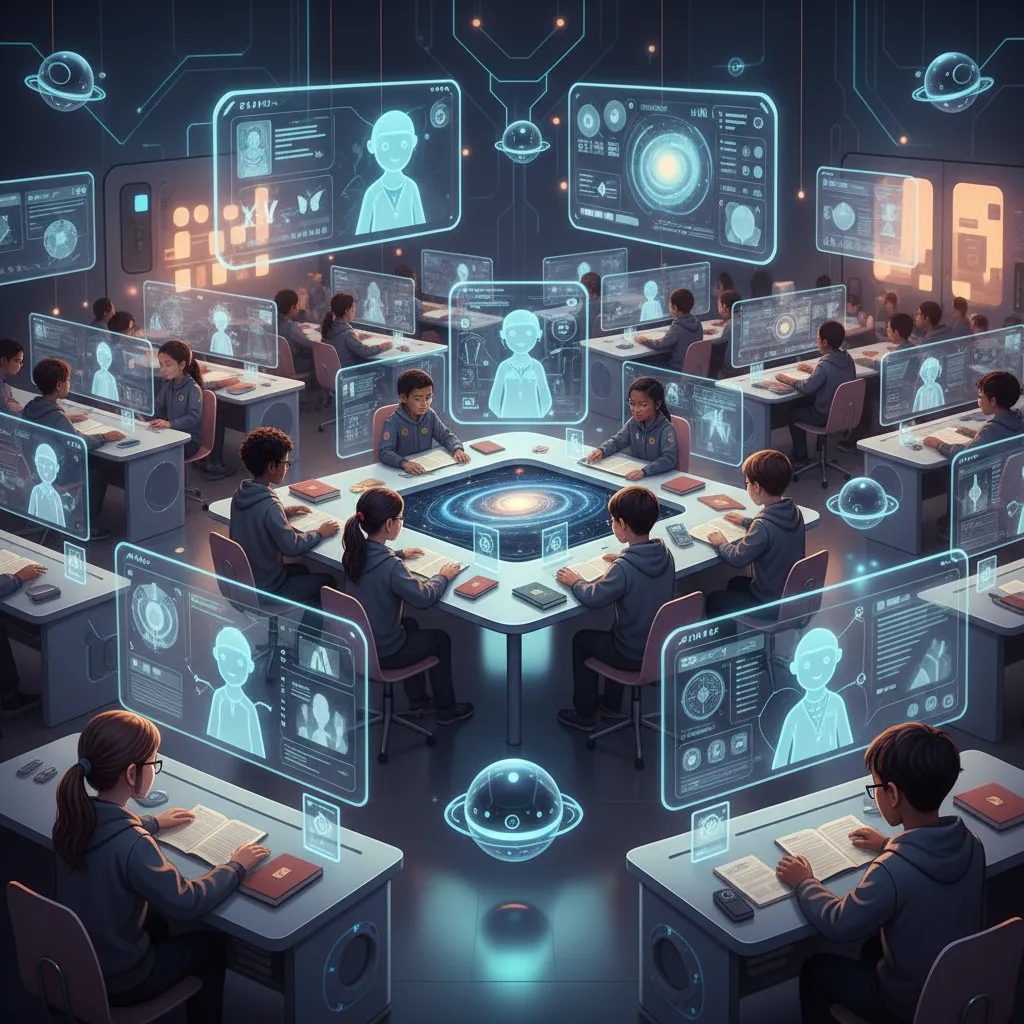
For centuries, education has followed a familiar script: a single teacher, a room full of students, and a standardized curriculum delivered at a single pace. This one-size-fits-all model, born of necessity, has served its purpose. But in a world of accelerating change, it’s showing its age. Students get left behind while others are held back, engagement wanes, and critical skill gaps widen. What if we could shatter this rigid framework and create a learning experience as unique as each individual’s fingerprint?
This is not a far-off dream; it’s the reality being built today through the powerful fusion of Artificial Intelligence (AI) and adaptive learning. This revolutionary approach is the cornerstone of a massive digital learning transformation, creating dynamic learning ecosystems that cater to individual needs, paces, and goals.
In this deep dive, you’ll discover how AI in education is moving beyond simple software to become a true partner in knowledge acquisition. We’ll explore the mechanics of AI-powered learning platforms, the rise of intelligent tutoring systems, and how this next-gen learning technology is not just changing the classroom but also revolutionizing corporate training AI and enabling future-proof learning for everyone.
The End of One-Size-Fits-All: What is Adaptive Learning?
Imagine trying to learn a complex new skill, like coding or a musical instrument, using a single textbook. Some chapters might feel impossibly difficult, while others are a tedious review of what you already know. This is the traditional, linear approach to learning.
Adaptive learning flips this model on its head. It’s a dynamic and data-driven educational method that uses technology to adjust the learning path in real time based on a user’s performance, engagement, and needs.
Think of it like a GPS for your education. Instead of following a single, predetermined route, an adaptive system constantly recalculates the best path to your destination (mastery of a subject) based on your progress, avoiding roadblocks (areas of difficulty) and finding shortcuts (topics you grasp quickly). AI is the supercomputer engine powering this GPS, processing vast amounts of data to make instantaneous, intelligent decisions about what you should learn next. This educational innovation moves us from a static content delivery system to a living, breathing smart learning environment.
The Core Components of an AI-Powered Learning Ecosystem
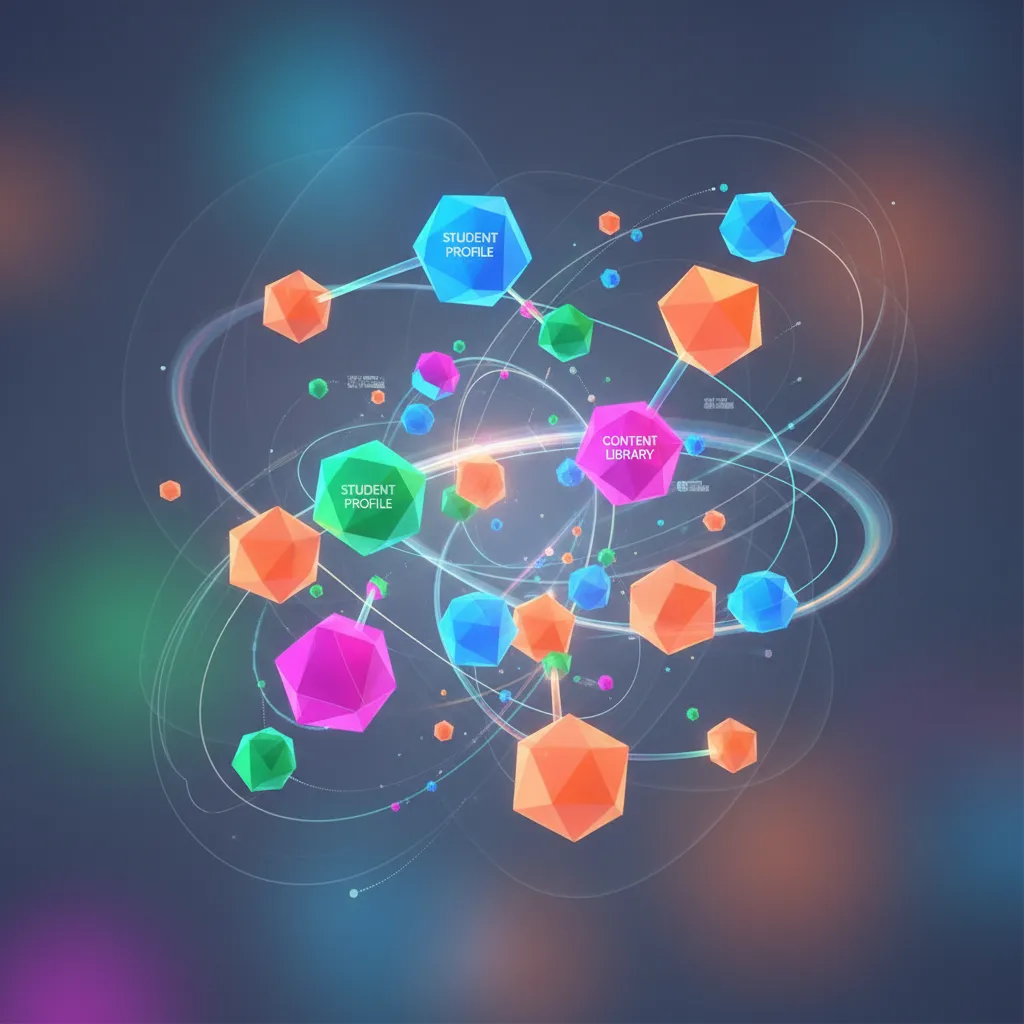
An effective adaptive learning system isn’t a single piece of software but a complex ecosystem of interconnected technologies working in concert. These components create a seamless and deeply personalized experience.
Data-Driven Education: The Role of Learning Analytics AI
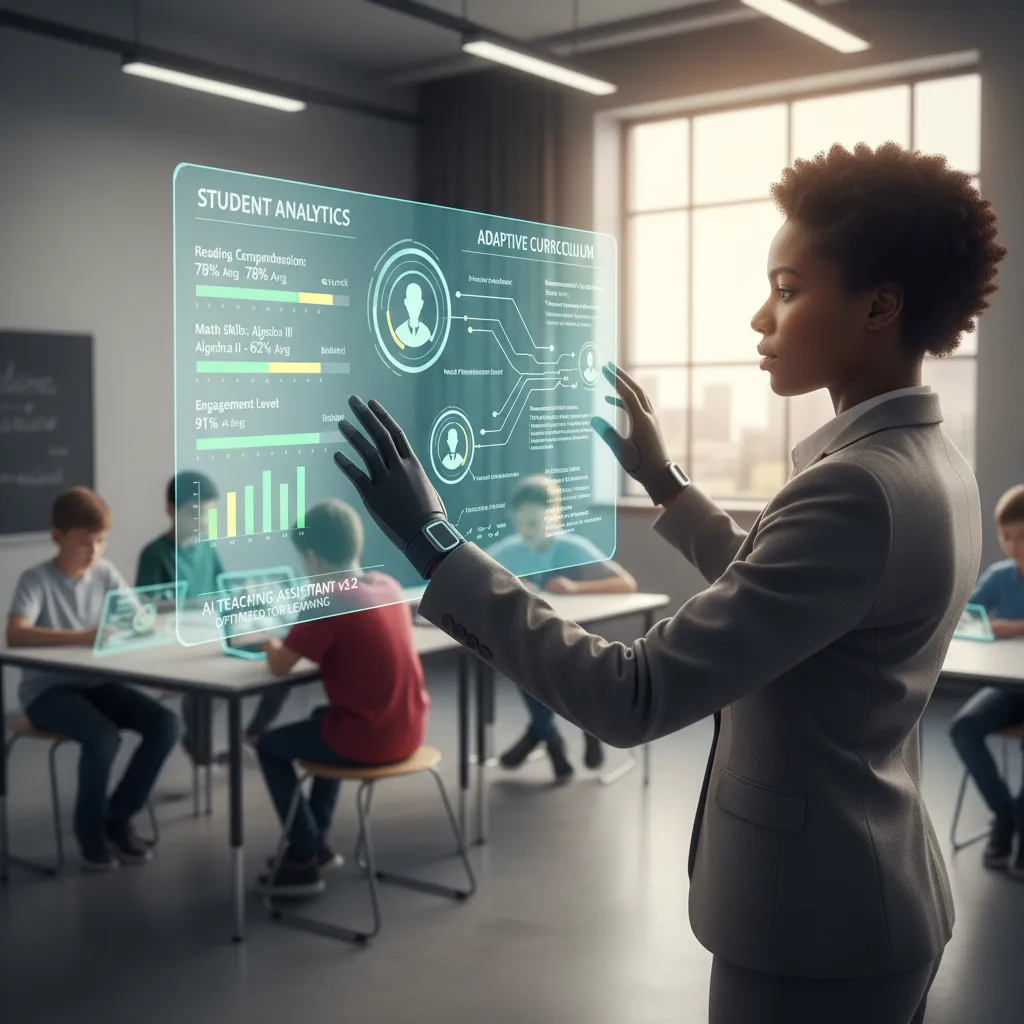
At the heart of any adaptive system is data. Every click, every answer, every hesitation, and every minute spent on a module is a valuable data point. Learning analytics AI is the brain that collects and interprets this information.
It goes far beyond simple test scores to understand the how and why behind a student’s performance.
- Performance Tracking: Is a student consistently struggling with a specific type of math problem?
- Engagement Metrics: Are they spending too little time on crucial reading material?
- Knowledge Gaps: The system can pinpoint precise personalized skill gaps that a traditional test might miss.
This continuous feedback loop allows the platform to build a rich, evolving profile of each learner, forming the basis for every personalization that follows. Related: How AI Can Supercharge and Automate Your Workflow
Intelligent Tutoring Systems (ITS)
If learning analytics is the brain, Intelligent Tutoring Systems (ITS) are the personal mentors. These are sophisticated AI programs designed to simulate the guidance and support of a one-on-one human tutor. Instead of just marking an answer right or wrong, an ITS can:
- Provide Socratic Feedback: Ask guiding questions to help a student arrive at the correct answer on their own.
- Offer Step-by-Step Hints: If a student is stuck, the ITS can provide just enough of a hint to get them moving again without giving away the solution.
- Deliver Customized Problems: Generate an endless supply of practice questions tailored to the student’s specific weaknesses.
Platforms like Carnegie Learning’s MATHia are prime examples, providing millions of students with personalized math coaching that has been shown to significantly improve outcomes. This is the pinnacle of student success AI.
Customized Learning Paths and AI Curriculum Design
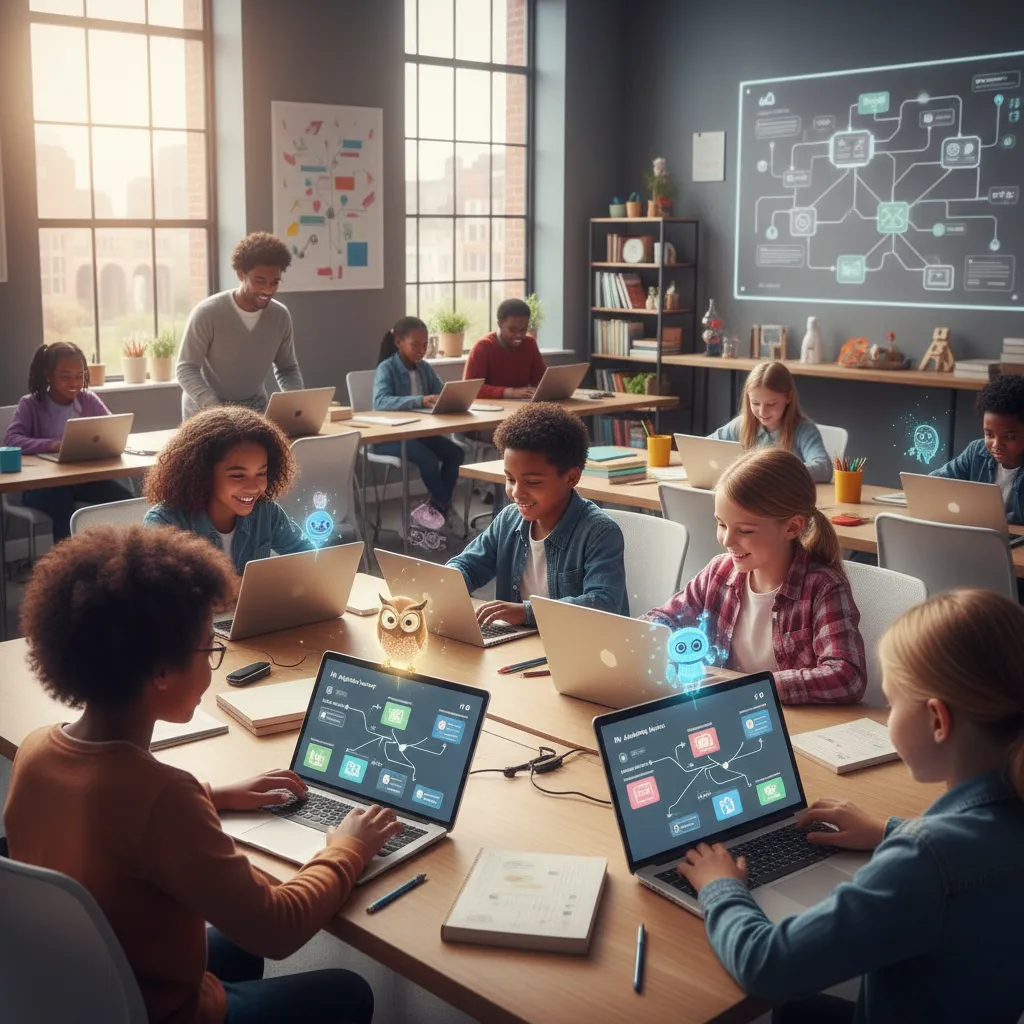
Armed with data from learning analytics, the system can dynamically construct customized learning paths. Two students starting the same course may have vastly different journeys:
- Student A, who struggles with foundational concepts, will be presented with remedial modules, simpler explanations, and more practice problems.
- Student B, who demonstrates quick mastery, might skip introductory units and be offered advanced, “stretch” content to keep them engaged and challenged.
AI curriculum design takes this a step further by helping educators and instructional designers build more effective and flexible courses from the ground up. The AI can identify the most logical sequence of topics, suggest prerequisite skills, and even generate new content on the fly, making the curriculum itself adaptive.
Adaptive Assessment AI
The traditional final exam is a snapshot in time—a high-stakes, often stressful event that may not accurately reflect a student’s true understanding. Adaptive assessment AI offers a more precise and less stressful alternative.
An adaptive test adjusts its difficulty in real-time.
- You answer a medium-difficulty question correctly. The next question is slightly harder.
- You answer that one incorrectly. The next question is slightly easier.
This process continues, quickly zeroing in on the precise upper limit of your knowledge. The result is a more accurate, efficient, and often faster assessment that provides a much clearer picture of a learner’s abilities.
Transforming Education: Key Benefits Across the Board
The shift towards AI-enhanced classrooms and learning platforms isn’t just a technological novelty; it delivers tangible benefits for everyone involved in the educational process.
For Students: Fostering Engagement and Mastery
The most significant impact is on the learner. By tailoring the experience, personalized education technology directly addresses the core reasons students disengage.
- Increased Engagement: Content that is perfectly challenging—not too hard, not too easy—is intrinsically more motivating.
- Reduced Frustration: Students no longer feel “stuck” or “stupid.” The system is designed to help them succeed, building confidence with every step.
- Deeper Understanding: By ensuring mastery of one concept before introducing the next, the system prevents the “swiss cheese” knowledge gaps that plague traditional learning.
For Educators: From Lecturer to Facilitator
A common fear is that AI will replace teachers. The reality is quite the opposite. AI for educators acts as a powerful assistant, automating tedious tasks and providing deep insights, which frees up teachers to do what they do best: inspire, mentor, and support their students.
- Automated Admin: AI can handle grading for quizzes and routine assignments.
- Actionable Insights: Dashboards highlight which students are struggling and on which specific topics, allowing for targeted, early intervention.
- More Time for Humans: With less time spent on lecturing to the middle and more on administrative tasks, teachers can focus on small-group instruction, project-based learning, and one-on-one mentorship. Related: AI Tutors Are Revolutionizing Personalized Education
For Institutions: Driving Efficiency and Outcomes
For schools, universities, and corporations, implementing an adaptive learning framework is a strategic investment in success.
- Improved Retention: Students who feel supported and successful are far more likely to complete their courses and programs.
- Scalable Personalization: Institutions can offer a personalized learning experience to thousands of students simultaneously, something that would be impossible with human tutors alone.
- Data-Backed Improvement: Data-driven education provides administrators with a clear view of what’s working and what isn’t, enabling continuous improvement of the curriculum and teaching methods.
Beyond the Classroom: AI in Workforce Training and Lifelong Learning
The need for learning doesn’t end with a diploma. In today’s economy, skills have a shorter half-life than ever before. Skill development AI is becoming a critical tool for both companies and individuals looking to stay competitive.
Closing the Skills Gap with Corporate Training AI
Companies are facing a massive skills gap, where the abilities of their workforce don’t match the needs of the business. AI in workforce training offers a powerful solution.
Instead of generic training seminars, companies can deploy adaptive platforms that:
- Assess Employee Skills: Identify the specific knowledge gaps within teams and across the organization.
- Deploy Personalized Training: Assign relevant modules to employees, from new-hire onboarding to advanced technical upskilling.
- Track Progress to Business Goals: Link learning outcomes directly to performance metrics, demonstrating a clear return on investment.
This approach ensures that training is relevant, efficient, and directly contributes to both employee growth and business success.

Future-Proofing Your Career: The Rise of Lifelong Learning AI
The concept of a “job for life” is gone. Today, career success depends on lifelong learning. AI is making this continuous upskilling more accessible and effective than ever.
Platforms like Coursera, edX, and LinkedIn Learning use AI to recommend courses based on your career goals, current skills, and emerging industry trends. This lifelong learning AI acts as a personal career strategist, helping you build a dynamic skill set to remain valuable in the job market and pursue new opportunities with confidence. This is the essence of future skills development.
The Future of Education AI: Trends and Innovations on the Horizon
We are only scratching the surface of what’s possible. Several educational AI trends are poised to make learning even more effective and engaging.
Immersive Learning Experiences: VR, AR, and AI
Imagine a medical student performing a simulated surgery in virtual reality (VR), with an AI guide providing real-time feedback on their technique. Or an engineering student using an augmented reality (AR) app on their phone to see a 3D model of a jet engine, with an AI explaining the function of each part. The combination of immersive learning experiences and AI will create hands-on, safe, and highly effective training environments.
Generative AI and Hyper-Personalization
The rise of powerful generative AI models like those behind ChatGPT is set to supercharge personalization. In the near future, an AI tutor won’t just recommend pre-written content; it will be able to:
- Generate custom explanations and analogies based on a student’s interests.
- Create unique practice problems and case studies on any topic imaginable.
- Engage in natural language conversations to debate complex topics and deepen understanding.
Ethical Considerations and Challenges
Of course, this technological leap forward comes with critical responsibilities. We must address challenges around data privacy, ensuring student information is secure and used ethically. We also need to be vigilant about algorithmic bias, ensuring that AI systems provide equitable opportunities for all learners, regardless of their background. Finally, maintaining the crucial role of human oversight and connection will be paramount to a successful future of education AI.
Conclusion
The era of passive, one-size-fits-all education is drawing to a close. The convergence of AI and adaptive learning is ushering in a new age of personalized education technology, one that is more engaging, effective, and equitable. By creating smart learning environments that understand and respond to our individual needs, this technology empowers us to not only learn more efficiently but to cultivate a passion for lifelong learning.
From the K-12 classroom to the corporate training room, these intelligent ecosystems are providing the tools we need to close skill gaps, unlock human potential, and confidently master the skills of tomorrow, today. The digital learning transformation is here, and it’s personal.
FAQs
Q1. What is an AI adaptive learning system?
An AI adaptive learning system is a digital educational platform that uses artificial intelligence to create a personalized learning experience for each user. It analyzes a learner’s performance, interactions, and behavior in real time to dynamically adjust the content, pace, and difficulty of the material to optimize understanding and mastery.
Q2. What is the role of AI in personalized learning?
In personalized learning, AI acts as the engine for customization at scale. Its role includes collecting and analyzing vast amounts of student data (learning analytics), identifying individual strengths and weaknesses, recommending relevant content, providing real-time feedback through intelligent tutoring systems, and creating unique, customized learning paths for every student.
Q3. What are examples of adaptive learning technologies?
Examples of adaptive learning technologies include platforms like DreamBox Learning and IXL for K-12 math, Carnegie Learning’s MATHia for intelligent math tutoring, and corporate learning platforms like Axonify and Knewton, which tailor workforce training to individual employee needs and skill gaps.
Q4. What are the main benefits of adaptive learning?
The main benefits of adaptive learning include increased student engagement and motivation, improved knowledge retention and mastery, greater efficiency by focusing time on areas of need, and providing educators with deep, actionable insights to better support their students. For institutions, it leads to higher completion rates and more effective educational outcomes.
Q5. What is the difference between adaptive learning and personalized learning?
Personalized learning is a broad educational concept that aims to customize learning for each student’s strengths, needs, and interests. Adaptive learning is a specific method for achieving personalization, using technology and AI to automatically and dynamically adjust the learning path in real time based on data from student interactions. Adaptive learning is a powerful tool to implement a personalized learning strategy.
Q6. How does AI help in identifying skill gaps?
AI identifies personalized skill gaps by analyzing a learner’s performance data across a wide range of tasks, quizzes, and interactions. It looks for patterns of incorrect answers or consistent struggles with specific concepts. By mapping these patterns against a curriculum’s knowledge graph, the AI can pinpoint the exact foundational skills a learner is missing and recommend targeted interventions.
Q7. Is AI technology difficult for educators to use?
Modern AI-powered learning platforms are designed with user-friendliness in mind. While the underlying technology is complex, the interface for educators is typically an intuitive dashboard. It presents complex student data through simple visualizations, highlights at-risk students, and makes it easy to see where the class is excelling or struggling, requiring minimal technical expertise.